
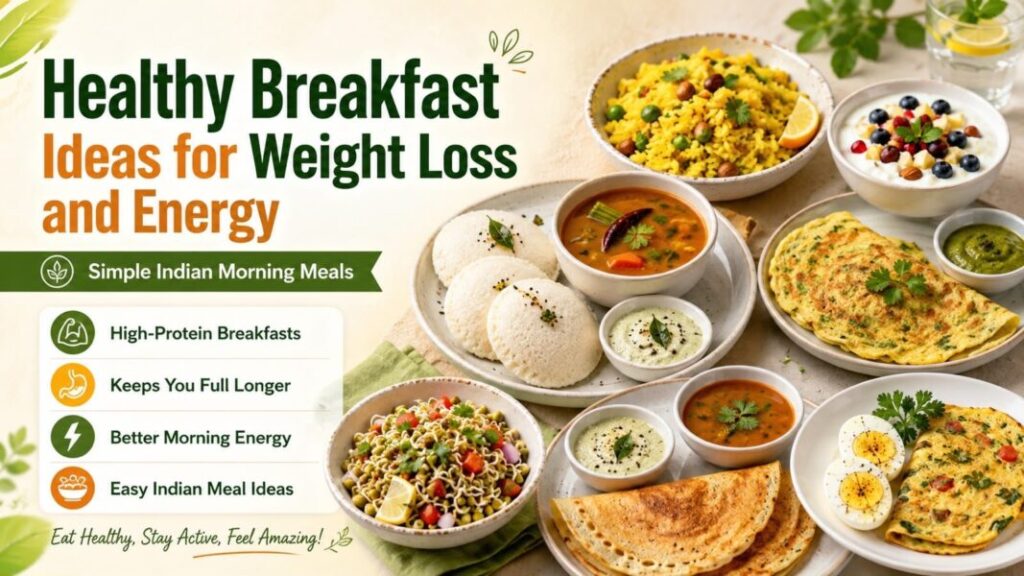
Healthy Breakfast Ideas for Weight Loss and Energy: Simple Indian Morning Meals
🌞 Introduction: A Good Breakfast Should Feel Light, Not Lazy
Morning food can decide how the first half of your day feels.
Some breakfasts make us active and fresh. Some make us sleepy within one hour. Some look healthy, but they are loaded with sugar, oil or refined carbs. And some simple Indian breakfasts, when made smartly, can support both weight loss and daily energy.
A healthy breakfast does not mean eating expensive oats, imported seeds or fancy diet products every day. It can be as simple as idli with sambar, poha with peanuts, dal dosa, besan chilla, curd bowl, egg with roti, sprouts chaat or vegetable upma.
The real secret is balance.
A good breakfast should have three things:
- Protein to keep you full
- Fibre to support digestion and fullness
- Slow energy carbs to avoid sudden hunger
ICMR-NIN’s latest Dietary Guidelines for Indians highlight balanced meals, food variety and the need to reduce excess salt, sugar and ultra-processed foods in daily eating.
🥣Healthy Breakfast Ideas for weight Loss and Energy: Why breakfast matters for Weight Loss
Breakfast is not magic. Eating breakfast alone will not reduce weight. Weight loss depends on your total daily food intake, physical activity, sleep, stress and health condition.
But a smart breakfast can help in one important way: it can reduce unnecessary hunger and random snacking later.
For example, tea and biscuits may feel enough at 8 AM, but by 10:30 AM, hunger comes back. Then we may eat chips, sweets, bakery snacks or extra rice at lunch. That is where breakfast quality matters.
CDC explains that healthy weight loss is not about a short-term diet. It includes healthy eating patterns, regular physical activity, enough sleep and stress management. People who lose weight gradually and steadily are more likely to keep it off.
So, the goal is not to “skip everything”. The goal is to eat better.
⚡ What Makes a Breakfast Good for Energy?
A breakfast that gives energy should not spike your blood sugar suddenly and then make you tired. Harvard Health explains that lower-glycemic breakfast choices can support more sustained energy, and foods like fruits, vegetables, legumes, nuts, seeds and whole grains usually have a lower glycemic load.
For Indian homes, this means:
- Choose idli + sambar over only plain white bread
- Choose poha with peanuts and vegetables over sugary cereal
- Choose besan chilla with curd over biscuits
- Choose egg + roti over only tea
- Choose curd + fruit + nuts over sweet packaged drinks
A healthy breakfast should not feel like punishment. It should be practical, tasty and repeatable.
✅ Healthy Breakfast Ideas for weight Loss and Energy: The Simple Breakfast Formula
Use this easy formula:
Protein + Fibre + Smart Carbs + Small Healthy Fat
Example:
Vegetable upma + curd + peanuts
Here, upma gives carbs, vegetables give fibre, curd adds protein, and peanuts add protein plus healthy fat.
Another example:
2 idlis + sambar + chutney
Idli gives carbs, sambar adds dal protein and vegetables, and chutney adds taste.
CDC’s healthy eating guidance also recommends vegetables, fruits, whole grains, healthy fats, dairy without added sugars and protein options like eggs, legumes, soy, nuts and seeds.
🍽️ Best Healthy Indian Breakfast Ideas for Weight Loss and Energy
🥞 1. Besan Chilla With Curd
Besan chilla is one of the best Indian breakfast choices when you want something filling but not too heavy.
Make it with:
- Besan
- Onion
- Tomato
- Green chilli
- Coriander
- Ajwain
- Grated carrot or capsicum
Eat it with plain curd or mint chutney.
Why it works
Besan gives plant protein. Vegetables add fibre. Curd makes it more satisfying. This breakfast is also quick and budget-friendly.
🍚 2. Vegetable Poha With Peanuts
Poha is common, but the way we make it decides whether it is light or heavy.
Make poha healthier by adding:
- Peanuts
- Green peas
- Carrot
- Onion
- Curry leaves
- Lemon
- Coriander
Avoid making it too oily. Also, do not eat a very large plate if your goal is weight loss.
Why it works
Poha gives quick morning energy, peanuts add protein and healthy fat, and vegetables improve fibre.
🥣 3. Idli With Sambar
Idli is soft, light and easy to digest for many people. But plain idli alone may not keep you full for long.
The better combination is:
Idli + thick sambar + chutney
Sambar adds dal and vegetables. That makes the meal more balanced.
Why it works
This is a simple breakfast with carbs, dal protein and vegetables. It is also better than deep-fried breakfast options when portion size is controlled.
🫘 4. Sprouts Chaat
Sprouts are useful when you want a light, high-fibre breakfast.
Use:
- Moong sprouts
- Chopped onion
- Tomato
- Cucumber
- Lemon
- Coriander
- Little roasted jeera powder
You can also add boiled chana or peanuts for more fullness.
Why it works
Sprouts give plant protein, fibre and crunch. This breakfast is good for people who like fresh and light morning food.
🥚 5. Egg With Roti or Vegetable Omelette
For egg eaters, this is one of the simplest high-protein breakfasts.
Good options:
- 2 boiled eggs + 1 roti
- Vegetable omelette + curd
- Egg bhurji + small phulka
- Egg dosa
Why it works
Eggs provide good-quality protein. Adding vegetables and roti makes it more balanced than eating eggs alone.
🥛 6. Curd Bowl With Fruit and Nuts
This is useful for busy mornings.
Take plain curd and add:
- Banana or apple
- Few nuts
- Seeds if available
- Cinnamon or cardamom
- No added sugar
Harvard Health suggests breakfast options like plain yogurt with fruit and nuts, oatmeal with fruit and nuts, and whole grain toast with nut butter as simple ways to build a healthier breakfast.
Why it works
Curd gives protein and calcium, fruits give fibre and natural sweetness, and nuts improve fullness.
🌾 7. Oats or Dalia Upma
Oats and dalia can be good if cooked like a proper Indian meal, not like a sugary dessert.
Make it with:
- Vegetables
- Moong dal
- Curry leaves
- Ginger
- Peanuts
- Curd on the side
Why it works
Dalia and oats give slow energy. Vegetables add fibre. Dal or curd improves protein.
🥗 8. Moong Dal Dosa or Pesarattu
Moong dal dosa, also called pesarattu, is a very useful breakfast for weight loss and energy.
You can make it with soaked green moong, ginger, green chilli and cumin. Eat it with chutney or curd.
Why it works
It is more protein-rich than plain dosa and keeps you full for longer.
🍲 9. Vegetable Upma With Curd
Upma is common in many homes. But if it is only rava and oil, it may not be enough.
Improve it with:
- Carrot
- Beans
- Peas
- Onion
- Peanuts
- Curd on the side
Why it works
This makes upma more filling and reduces the chance of mid-morning hunger.
🥜 10. Roasted Chana, Fruit and Buttermilk
This is a simple no-cooking breakfast or mid-morning option.
Try:
- Roasted chana
- One fruit
- Unsweetened buttermilk
Why it works
It is affordable, quick and better than biscuits or packaged snacks.
📌 Quick Breakfast Comparison Table
| Breakfast | Best For | Simple Tip |
|---|---|---|
| Besan chilla + curd | Fullness | Add vegetables |
| Idli + sambar | Light breakfast | Make sambar thick |
| Poha + peanuts | Quick energy | Use less oil |
| Sprouts chaat | Fibre | Add lemon and cucumber |
| Egg + roti | Protein | Add vegetables |
| Curd + fruit + nuts | Busy mornings | Avoid sugar |
| Moong dal dosa | Weight loss | Use less oil |
| Dalia upma | Slow energy | Add dal or curd |
❌ Breakfast Mistakes That Can Block Weight Loss
1. Only Tea and Biscuits
Tea and biscuits are common, but they do not make a proper breakfast. They are low in protein and fibre, and hunger can return quickly.
2. Too Much Oil
Poha, upma, dosa, paratha and chilla can all become high-calorie if too much oil is used.
3. Sweet Breakfast Every Day
Sweet cornflakes, sweet tea, sweetened yogurt, packaged juices and bakery items can add unnecessary sugar.
WHO’s healthy diet guidance highlights variety through fruits, vegetables, pulses, wholegrains and lean protein sources, while also limiting free sugars, excess salt and unhealthy fats.
4. No Protein
A breakfast with only carbs may not keep you full. Add curd, dal, egg, sprouts, paneer, peanuts or chana.
5. Very Large Portions
Even healthy food can slow weight loss if the portion is too large. Nuts, peanuts, ghee, oil and smoothies are healthy in the right quantity, but they are not calorie-free.
🧠 Best Breakfast Plate Method
For most people, this simple method works well:
- Half plate: vegetables, fruit or salad-style add-ons
- One quarter: protein like dal, egg, curd, sprouts, paneer or chana
- One quarter: carbs like idli, roti, poha, oats, dalia or dosa
- Small amount: nuts, seeds, ghee or oil
This is not a strict rule. It is a simple way to avoid eating only carbs in the morning.
🕒 Should You Eat Breakfast Immediately After Waking Up?
Not always.
Some people wake up hungry. Some people do not. Harvard Health notes that breakfast does not have to happen immediately after waking up, and the bigger focus should be on the quality of the meal when you break your overnight fast.
But children, pregnant women, people with diabetes, people on certain medicines and people with specific health conditions should follow medical advice and should not copy fasting trends blindly.
🚶 Breakfast Alone Is Not Enough
A healthy breakfast helps, but your full lifestyle matters.
WHO’s 2024 physical activity fact sheet says regular physical activity supports physical and mental health, and that any amount of activity is better than none. It also reports that around 31% of adults worldwide do not meet recommended activity levels.
So, for weight loss and energy, combine breakfast with:
- Daily walking
- Strength exercise if possible
- Good sleep
- Less late-night snacking
- More water
- Less ultra-processed food
✅ 7-Day Simple Indian Breakfast Plan
Monday
Besan chilla + curd
Tuesday
Idli + sambar
Wednesday
Vegetable poha + peanuts
Thursday
Moong dal dosa + chutney
Friday
Egg bhurji + roti
Vegetarian option: paneer bhurji + roti
Saturday
Curd bowl with fruit and nuts
Sunday
Vegetable dalia upma + buttermilk
Keep the portions according to your hunger, age, activity level and health condition.
💡 Final Takeaway
A healthy breakfast for weight loss and energy does not need to be fancy.
The best Indian breakfast is the one you can repeat without stress. Choose food that keeps you full, gives steady energy and does not overload your morning with sugar or oil.
A simple rule is enough:
Do not eat only carbs. Add protein, fibre and controlled portions.
That one change can make your breakfast more useful, more filling and more weight-loss friendly.
🙋♀️ 5 FAQs
1. Which Indian breakfast is best for weight loss?
Besan chilla with curd, idli with sambar, moong dal dosa, sprouts chaat and egg with roti are good options when portions are controlled.
2. Is poha good for weight loss?
Yes, poha can be good if made with vegetables, peanuts and less oil. Avoid very large portions.
3. Can I skip breakfast for weight loss?
Some people can manage without early breakfast, but it depends on health, routine and hunger. People with medical conditions should take professional advice.
4. What should I avoid in breakfast?
Avoid daily biscuits, sugary cereals, bakery items, deep-fried snacks, sweet drinks and very oily breakfast foods.
5. What is the best quick breakfast for energy?
Curd with fruit and nuts, roasted chana with fruit, boiled eggs with roti, or idli with sambar are quick and practical options.
Further Reading
Healthy Indian Food Combinations Explained: Dal Rice, Curd Jeera and Turmeric Pepper
High-Protein Indian Foods: Best Budget Options for Daily Health
Healthy School Food: Why Kids’ Nutrition Is Back in the Spotlight in 2026
Brain-Healthy Foods: Why the MIND Diet Is Getting More Attention in 2026
7 No-Cook Breakfasts Recipes for Healthy and Budget Indian Mornings.
Low-Sodium Eating in 2026: Hidden Salt in Everyday Foods and Smarter Ways to Cut It
Sustainable and Local Food Movement: Why Climate and Health Are Finally Sharing the Same Plate
⚠️ Disclaimer
This article is for general health and educational purposes only. It is not medical advice or a weight-loss prescription. Food needs differ based on age, pregnancy, diabetes, thyroid issues, kidney disease, heart disease, digestion problems, activity level and medicines. Please consult a qualified doctor or registered dietitian before making major diet changes, especially if you have a medical condition.
Article Information
Author: Kartalks Editorial Team
Reviewed by: Kartalks Health Content Desk
Content Type: Food, health, wellness, nutrition awareness, lifestyle tips, and general public health information
Sources: official public health references, nutrition awareness resources, food safety guidelines, wellness references, and official public sources
Last Updated: June 15, 2026