
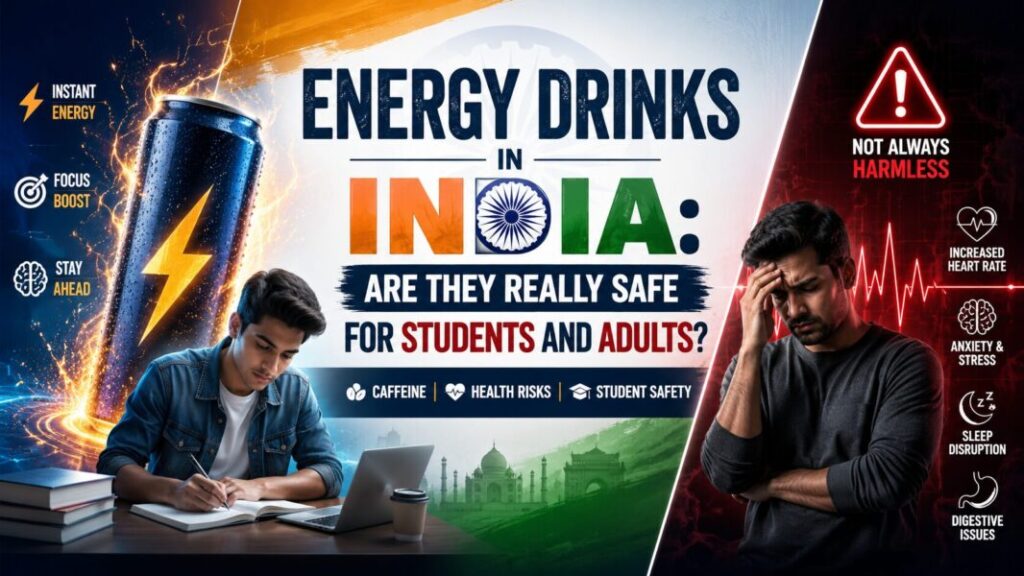
🥤 Energy Drinks in India: Are They Really Safe for Students and Adults?
Energy drinks are now easy to find across India. They are available in supermarkets, petrol pumps, gyms, college areas, online grocery apps and even small local stores. Many people buy them for quick energy, better focus, late-night study, gaming, gym sessions, long driving or office tiredness.
But one important question should come first: Are energy drinks in India really safe for students and adults?
The honest answer is simple. Energy drinks are not normal soft drinks. They are usually high-caffeine beverages with added sugar, flavouring and other stimulant-type ingredients. For adults, occasional use may not be dangerous for everyone, but daily use or overuse can create health issues. For children and teenagers, caffeinated energy drinks are better avoided.
This topic has become more important because India’s food safety regulator has recently increased scrutiny on beverage brands using “energy drink” wording and strong promotional claims. In July 2026, reports said FSSAI issued notices to six beverage brands over alleged misbranding and misleading claims related to products marketed as energy drinks. The regulator also reportedly said it has not notified a specific standard for products named as “energy drinks” or similar beverages.
🧃 What Are Energy Drinks?
Energy drinks are packaged beverages that usually contain caffeine, sugar or artificial sweeteners, flavours, acidity regulators and sometimes ingredients like taurine, inositol, B vitamins, guarana, ginseng or L-carnitine.
They are marketed as drinks that may improve alertness, reduce tiredness or support energy. But readers should understand one thing clearly: caffeine does not create real energy like food does. It mainly stimulates the nervous system and temporarily reduces the feeling of tiredness.
That is why a person may feel active for some time after drinking it, but later may feel tired, irritated, sleepy or low again.
⚖️ FSSAI Rules: What Indian Consumers Should Know
In India, FSSAI has standards for caffeinated beverages. According to FSSAI’s beverage standards, such products should contain not less than 145 mg per litre and not more than 300 mg per litre of total caffeine from all sources. The label must also declare caffeine amount per serving and carry cautionary wording for children, pregnant or lactating women and caffeine-sensitive people.
This is very important for readers because many people buy energy drinks without checking the label. Some people drink one full bottle quickly, while others drink it with coffee or tea on the same day. That can increase total caffeine intake.
Quick FSSAI Snapshot
| Point | What It Means |
|---|---|
| Caffeine limit | 145–300 mg per litre for caffeinated beverages |
| Label warning | Not recommended for children, pregnant/lactating women and caffeine-sensitive people |
| Caffeine declaration | Amount of caffeine should be shown per serving |
| Consumer caution | Do not treat these drinks as health drinks or medical products |
🎓 Are Energy Drinks Safe for Students?
For school students and teenagers, the safer answer is no, energy drinks are not a good choice.
Students may use energy drinks during exams, night study, sports practice, gaming or long tuition hours. For a short period, caffeine may make them feel more alert. But the same caffeine can disturb sleep, increase heart rate, trigger anxiety and affect the next day’s focus.
The CDC says energy drinks often contain large amounts of caffeine, added sugars and stimulants such as guarana, taurine and L-carnitine. It also notes that the American Academy of Pediatrics recommends that adolescents should not consume energy drinks.
Why Students Should Avoid Energy Drinks
Energy drinks may look stylish, but for students they can create several problems:
- Poor sleep quality
- Late-night alertness followed by next-day tiredness
- Fast heartbeat or palpitations
- Anxiety, nervousness or shaking
- Acidity or stomach discomfort
- Headache after caffeine effect reduces
- Habit formation during exam periods
- Higher sugar intake if the drink is sugar-loaded
A student’s body needs proper food, water, sleep and breaks. Caffeine cannot replace these basics.
👨💼 Are Energy Drinks Safe for Adults?
For healthy adults, one small energy drink occasionally may not cause a problem. But regular use is not a healthy habit.
Adults should be more careful if they already drink tea, coffee, cola or pre-workout supplements. All these can add caffeine to the day. Even if one drink looks harmless, the total caffeine load may become high.
Energy drinks may be risky for adults who have:
- High blood pressure
- Heart rhythm problems
- Anxiety or panic symptoms
- Sleep problems
- Acidity or gastric irritation
- Thyroid-related sensitivity
- Pregnancy or breastfeeding
- Doctor-advised caffeine restriction
People who feel palpitations, chest discomfort, severe headache, dizziness or breathlessness after drinking an energy drink should not ignore it.
⚠️ Possible Side Effects of Energy Drinks
Energy drink side effects can differ from person to person. Some people may tolerate caffeine well, while others may feel uncomfortable even with a small amount.
Common Side Effects
- Increased heartbeat
- Palpitations
- Nervousness
- Shaking hands
- Headache
- Acidity
- Nausea
- Poor sleep
- Dehydration feeling
- Irritability
- Sugar crash
- Reduced appetite
Serious Warning Signs
Seek medical advice if someone experiences chest pain, fainting, severe palpitations, confusion, breathlessness or extreme anxiety after consuming an energy drink.
🏋️ Energy Drinks vs Sports Drinks: Know the Difference
Many people confuse energy drinks with sports drinks. Both are not the same.
| Drink Type | Main Purpose | Better For |
|---|---|---|
| Energy drink | Alertness from caffeine/stimulants | Not suitable for children; adults only with caution |
| Sports drink | Hydration with salts and carbohydrates | Long sports activity or heavy sweating |
| Water | Basic hydration | Daily use for everyone |
| Coconut water/lemon water | Natural hydration support | Hot weather and light tiredness |
For normal walking, office work, school, college, gaming or light gym workout, water is enough for most people. Energy drinks are not required for daily energy.
🍺 Never Mix Energy Drinks With Alcohol
This point is important for college students and adults.
Caffeine may make a person feel more alert, but it does not reduce the effect of alcohol on the body. The CDC warns that alcohol mixed with caffeine can lead to more drinking, more injury risk and other health problems. It also states that caffeine does not reduce alcohol’s effect on the body.
So, mixing alcohol with energy drinks can be risky. A person may feel “active” but still have poor judgment, slow reaction time and reduced control.
CDC: The Buzz on Energy Drinks
🧾 How to Read the Label Before Buying
Before buying any energy drink in India, readers should check the label carefully.
Label Checklist for Consumers
1. Check caffeine per serving
Do not only look at bottle size. See how much caffeine is present in one serving.
2. Check sugar content
Some drinks may contain high sugar. Regular use can increase calorie intake.
3. Check serving size
Some cans or bottles may look like one serving but may contain more than one serving.
4. Check warning statement
Avoid if the label says not recommended for children, pregnant women, lactating women or caffeine-sensitive people.
5. Check other stimulant ingredients
Guarana may also contribute caffeine. Taurine, ginseng and similar ingredients should also be noticed.
6. Don’t trust big claims blindly
Claims like “instant energy,” “focus booster,” “body and mind activation” or “general weakness support” should not be treated like medical proof.
🧠 Do Energy Drinks Improve Study Focus?
Energy drinks may give temporary alertness because of caffeine. But this does not mean they improve real learning, memory or exam performance.
Good study focus comes from:
- Proper sleep
- Balanced meals
- Hydration
- Revision planning
- Short breaks
- Reduced screen distraction
- Regular routine
A student who studies late at night with caffeine may feel awake for a few hours, but poor sleep can reduce memory and concentration the next day.
🟢 Better Alternatives for Daily Energy
Most tiredness comes from poor sleep, dehydration, skipped meals, stress, too much screen time or lack of movement. Instead of depending on energy drinks, readers can choose safer options.
Healthier Drink Options
- Plain water
- Coconut water
- Lemon water
- Buttermilk
- Sattu drink
- Unsweetened lassi
- Fresh fruit smoothie without excess sugar
- Homemade nimbu pani
- Jeera water
- Light tea or coffee in moderation
Food Options for Natural Energy
- Banana
- Dates in limited quantity
- Roasted chana
- Peanuts
- Curd rice
- Poha
- Upma
- Idli
- Sprouts
- Boiled eggs
- Fruit with nuts
These options provide real energy from nutrients, not only stimulation.
👪 Parent Guide: What Should Parents Tell Children?
Parents should explain this topic in simple words. Children may not understand caffeine limits, but they can understand the effect on sleep, heart rate and exam focus.
You can explain like this:
Energy drinks do not give real strength. They only push the body to feel awake for some time. Later, they can disturb sleep, increase heartbeat and make the next day more tiring. For study and sports, water, food and sleep are better than stimulant drinks.
Parents should also check what children buy near schools, tuition centres, gaming zones and sports areas. Attractive packaging and low pricing can make these drinks look normal, but they may not be suitable for children.
✅ Final Verdict: Are Energy Drinks in India Safe?
Energy drinks in India should be treated as caffeinated stimulant beverages, not health drinks.
For children and teenagers, they are best avoided. For students, they should not become a study habit, gaming habit or exam-time shortcut. For adults, occasional use may be okay for some healthy people, but daily use, late-night use, overuse or mixing with alcohol can be risky.
The smartest rule is simple: read the label, count total caffeine, avoid misleading claims and do not use energy drinks as a replacement for sleep, food or hydration.
Energy drinks may give temporary alertness, but real energy still comes from a balanced lifestyle
❓ 5 FAQs
Q1. Are energy drinks safe for students?
Energy drinks are not recommended for school students and teenagers because they usually contain caffeine, sugar and other stimulants.
Q2. Can adults drink energy drinks?
Healthy adults may drink them occasionally, but daily use is not a good habit. Always check caffeine and sugar on the label.
Q3. Do energy drinks give real energy?
Not really. They mostly make you feel alert for a short time because of caffeine. Real energy comes from food, water and sleep.
Q4. Are sugar-free energy drinks safe?
Sugar-free drinks may have less sugar, but they can still contain caffeine. So they should also be used carefully.
Q5. Who should avoid energy drinks?
Children, pregnant women, breastfeeding mothers, heart patients, people with anxiety, sleep problems or caffeine sensitivity should avoid them.
Further Reading
Are Healthy Packaged Foods Really Healthy? FSSAI Claim Check
Healthy Indian Food Combinations Explained: Dal Rice, Curd Jeera and Turmeric Pepper
High-Protein Indian Foods: Best Budget Options for Daily Health
Brain-Healthy Foods: Why the MIND Diet Is Getting More Attention in 2026
Front-of-Pack Nutrition Labels: What New Food Labels May Mean for Shoppers in 2026
Low-Sodium Eating in 2026: Hidden Salt in Everyday Foods and Smarter Ways to Cut It
Disclaimer
This article is for general awareness only. It is not medical advice. Please read the product label carefully and consult a doctor if you have any health condition before consuming energy drinks.