
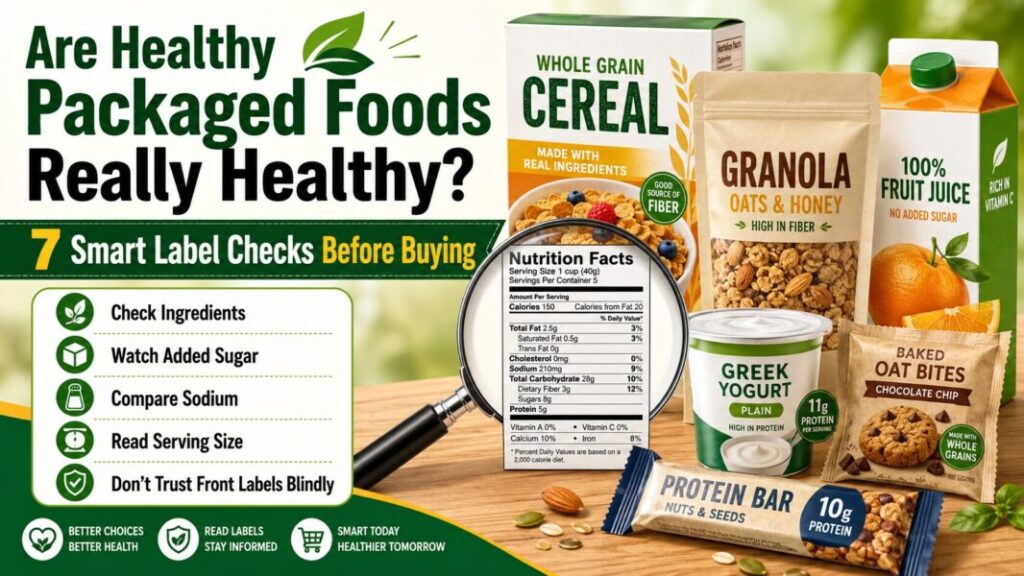
Are Healthy Packaged Foods Really Healthy? FSSAI Claim Check and Smart Buying Guide
🛒 Introduction: The “Healthy” Word on a Packet Can Be Confusing
Walk into any supermarket today and you will see shelves full of products claiming to be better for you.
“Healthy.”
“Natural.”
“No added sugar.”
“Heart-friendly.”
“High protein.”
“Multigrain.”
“Zero maida.”
“Immunity booster.”
At first glance, these words feel comforting. They make us believe the product is safe, clean and good for daily use. But the real question is simple:
Are healthy packaged foods really healthy?
The honest answer is: some are useful, some are okay occasionally, and some are just smart marketing.
A packet may look healthy on the front side, but the truth is usually written on the back side — in the ingredient list, nutrition table, serving size, sugar content, sodium level and fat details.
This topic has become even more important because FSSAI is now looking closely at food claims like “healthy,” “natural,” “heart-friendly,” and “no added sugar.” For consumers, this is a good time to learn how to read labels instead of trusting only big words on the front pack.
Healthy eating does not mean avoiding every packaged food. It means knowing which packaged foods are genuinely useful and which ones are only wearing a health mask.
🏷️ Why Packaged Foods Look Healthier Than They May Be
Food companies know that people are becoming more health-conscious. Many families now check for sugar, protein, millet, fibre and oil quality before buying.
That is a positive change.
But marketing also follows consumer interest. When buyers want “healthy,” brands start using healthy-looking words more aggressively. The problem begins when the front label creates a better image than the actual nutrition quality.
A product may say “multigrain,” but still contain mostly refined flour.
A drink may say “no added sugar,” but still contain high natural sugar or fruit concentrate.
A snack may say “baked,” but still be high in salt and fat.
A cereal may say “fitness,” but may contain added sugar.
A juice may show fruit pictures, but may contain reconstituted juice, sweeteners or added flavours.
This is called the health halo effect.
It means one positive word makes the entire product look healthy, even when the full label tells a different story.
⚖️ What FSSAI Scrutiny Means for Consumers
FSSAI does not say that every packaged food is bad. The main issue is misleading claims.
Food claims should not confuse customers. If a product says “no added sugar,” the consumer should not be misled into thinking it has no sugar at all. If a product says “natural,” the label should not hide heavy processing, additives or artificial ingredients. If a product says “heart-friendly,” the claim should be supported properly and should not create a medical-style promise.
For readers, the message is clear:
Do not buy only by the front label. Read the full label.
A beautiful packet is not proof of good nutrition. A celebrity ad is not proof of health. A green colour design is not proof of natural ingredients.
The back label is more important than the front design.
🔍 7 Smart Checks Before Buying Healthy Packaged Foods
1. Check the Ingredient List First
The ingredient list is one of the most important parts of a food label.
Ingredients are usually listed in descending order by quantity. That means the first few ingredients are present in the highest amount.
If the first ingredients are refined flour, sugar, palm oil, glucose syrup, maltodextrin or edible vegetable fat, the product may not be as healthy as the front label suggests.
Better signs:
- Whole grains listed first
- Dal, chana, oats, millet or nuts listed clearly
- Short and understandable ingredient list
- No unnecessary long list of additives
- Real food ingredients instead of only flavouring agents
Be careful if you see:
- Sugar in many names
- Refined flour as the first ingredient
- Hydrogenated fat or vanaspati
- Too many flavour enhancers
- Very long ingredient list for a simple food
A simple rule: if the product looks simple but the ingredient list looks like a chemistry notebook, pause before buying.
2. Do Not Trust “No Added Sugar” Blindly
“No added sugar” does not always mean sugar-free.
This is one of the most misunderstood claims. A product can have no white sugar added, but it may still contain sugar from fruit juice concentrate, dates paste, honey, jaggery, raisins, sugarcane juice or other sweet ingredients.
Some of these may sound natural, but they still add sweetness and calories.
Check these words:
- Fruit concentrate
- Date paste
- Honey
- Jaggery
- Malt syrup
- Glucose syrup
- Fructose
- Sucrose
- Cane juice
- Invert syrup
- Molasses
Natural sugar is still sugar. The body does not give unlimited permission just because the source sounds traditional.
For people with diabetes, weight-loss goals or fatty liver concerns, this check becomes even more important.
3. Look at Sugar Per Serving and Per 100g
Many people check only the serving size. But serving size can be tricky.
For example, a biscuit packet may show sugar for one or two biscuits, but a person may eat six biscuits with tea. A cereal may show nutrition for a small serving, but the actual bowl we eat at home may be much bigger.
So check both:
- Sugar per serving
- Sugar per 100g
If sugar is high per 100g, the product is not a daily health food, even if it says “energy,” “fitness” or “natural.”
Simple tip:
Compare two similar products using the per 100g column. This makes comparison easier and fairer.
4. Watch Sodium in “Healthy” Snacks
Many packaged foods are not sweet, but they are salty.
Namkeen, baked chips, roasted snacks, soup mixes, instant noodles, sauces, ready-to-eat foods and flavoured makhana can be high in sodium.
Too much sodium is not good for blood pressure and overall heart health. Even snacks that say “baked,” “roasted” or “low fat” may still contain high salt.
Check for:
- Sodium
- Salt
- Seasoning mix
- Flavour enhancer
- Monosodium glutamate
- Baking soda
A snack can be low in sugar but high in salt. That still does not make it a free pass.
5. “High Protein” Does Not Always Mean Healthy
High-protein foods are trending now. Protein bars, protein chips, protein cookies, protein cereals and protein drinks are everywhere.
Protein is important, but the whole product still matters.
A protein bar may contain protein, but it may also have sugar alcohols, chocolate coating, refined oils, artificial flavours or high calories. A protein cookie may still be a cookie. A protein snack may still be salty and processed.
Ask these questions:
- How much protein is actually present per serving?
- Is the protein source clearly mentioned?
- Is sugar also high?
- Is fat also high?
- Is the product replacing real food unnecessarily?
For daily protein, simple Indian foods like dal, chana, curd, eggs, paneer, soy, fish, chicken, peanuts and sprouts are often more practical and affordable.
Packaged protein foods can be used sometimes, but they should not become the base of your diet.
6. Understand “Multigrain” and “Millet” Claims
Millets and whole grains are good additions to the Indian diet. But every millet-labelled product is not automatically healthy.
A biscuit may say “ragi” but contain more maida than ragi. A bread may say “multigrain” but still be mostly refined wheat flour. A snack may say “millet-based” but may be fried or high in salt.
What to check:
- Is millet listed in the first few ingredients?
- What percentage of millet is used?
- Is refined flour also present?
- Is sugar high?
- Is the product baked, fried or heavily processed?
Millet is good. But millet plus sugar plus refined flour plus oil does not become a daily health food.
7. Check Fats, Oils and Trans Fat
Many packaged snacks depend on fat for taste and texture.
Check the nutrition table for:
- Total fat
- Saturated fat
- Trans fat
- Type of oil used
Also check the ingredient list for palm oil, edible vegetable fat, hydrogenated fat or bakery shortening.
A product can be sugar-free but high in unhealthy fat. Another product can be baked but still contain refined oils. This is why checking only one nutrient is not enough.
🧃 Common Packaged Foods That Need Extra Attention
Breakfast Cereals
Many cereals look healthy because they show grains, fruits or fitness words. But some may be high in sugar. Check sugar per 100g before buying.
Fruit Juices
Whole fruit is usually better than packaged juice. Juice may lack fibre and may contain concentrated sugars. If the label says reconstituted, understand that it is made from concentrate with water added back.
Protein Bars
Useful sometimes, but not compulsory. Check sugar, calories, protein source and ingredient list.
Baked Snacks
“Baked” does not always mean healthy. Sodium and fat can still be high.
Instant Noodles and Ready Meals
Convenient, but usually not ideal for daily eating. Check sodium, refined flour, additives and serving size.
Health Drinks
Some health drinks may contain sugar or malt-based ingredients. Do not assume they are healthy only because they are marketed for energy or growth.
Packaged Millet Snacks
Good idea, but check actual millet percentage, oil, salt and sugar.
✅ What Makes a Packaged Food a Better Choice?
A packaged food is more trustworthy when it has:
- Simple ingredients
- Low added sugar
- Moderate sodium
- Reasonable fat quality
- Clear nutrition table
- Real food ingredients
- Good protein or fibre naturally
- No exaggerated disease-related claims
- Transparent serving size
- No misleading front-label promise
Examples of better packaged choices may include plain curd, unsweetened Greek-style curd, roasted chana, plain oats, simple peanut butter without added sugar, whole wheat or millet products with clear ingredients, nuts, seeds and minimally processed foods.
Even then, portion size matters.
🍽️ Best Rule: Packaged Food Should Support Home Food, Not Replace It
Packaged foods are not the enemy. But they should not replace your regular meals.
A healthy Indian plate still comes from simple foods:
- Rice or roti
- Dal or sambar
- Vegetables
- Curd
- Fruits
- Eggs, paneer, fish or chicken if preferred
- Nuts and seeds in small portions
- Millets and whole grains when suitable
Packaged foods are useful for travel, busy mornings, office snacks and emergency hunger. But daily health should mostly come from home-style meals.
🧠 Simple Label Reading Method for Busy People
When you are in a supermarket, do this quick 30-second check:
Step 1: Ignore the front claim for a moment
Do not get impressed by “healthy,” “natural” or “fitness.”
Step 2: Read the first three ingredients
They tell you what the product is mostly made of.
Step 3: Check sugar, sodium and saturated fat
These three can change the health value quickly.
Step 4: Compare per 100g
This helps you compare two brands fairly.
Step 5: Ask one question
“Would I still buy this if the front claim was removed?”
If the answer is no, maybe the product is more marketing than nutrition.
🚫 Red Flags on Packaged Food Labels
Be careful when you see:
- “Healthy” without clear reason
- “Natural” on highly processed foods
- “No added sugar” but sweet ingredients inside
- “Multigrain” with refined flour first
- “Heart-friendly” without proper nutrition support
- “Immunity booster” with high sugar
- “Low fat” but high sugar
- “Sugar-free” but full of artificial sweeteners
- “High protein” but low actual protein per serving
- “Fruit drink” with very little fruit
These words do not always mean the product is bad, but they mean you should check carefully.
🛍️ Smart Shopping List: Better Packaged Options
Here are some practical packaged foods that can be useful when chosen carefully:
Better Snack Options
- Roasted chana
- Plain makhana
- Unsalted peanuts
- Nuts and seeds
- Plain popcorn kernels
- Low-salt khakhra
Better Breakfast Options
- Plain oats
- Dalia
- Unsweetened curd
- Simple muesli with low sugar
- Whole grain bread with clear ingredients
Better Travel Options
- Roasted chana
- Peanut chikki in small portions
- Nuts
- Unsweetened buttermilk
- Fruit plus plain curd
Better Protein Options
- Plain curd
- Paneer
- Soy chunks
- Roasted chana
- Peanut butter with no added sugar
- Protein product only when the label is clean and the need is real
💡 Final Takeaway
Healthy packaged foods can be helpful, but the word “healthy” on the packet is not enough.
A product becomes healthier only when the ingredients, nutrition values and claims all make sense together.
The best habit is simple:
Read the back label before trusting the front label.
FSSAI’s stricter attention on claims is a good reminder for all of us. Consumers should not panic, but we should become smarter. Choose packaged foods carefully, eat more home-cooked meals, and do not let marketing words decide your health.
🙋♀️ 5 FAQs
Q1. Are all healthy packaged foods bad?
No. Some packaged foods are useful, but you should check ingredients, sugar, salt, fat and serving size before buying.
Q2. Does “no added sugar” mean sugar-free?
No. It only means sugar may not be added separately. The product can still contain natural sugars or sweet ingredients.
Q3. Is multigrain food always healthy?
Not always. Check whether whole grains or millets are actually present in good quantity. Some multigrain products still contain refined flour.
Q4. Are protein bars good for daily use?
Protein bars can be convenient sometimes, but they should not replace regular foods like dal, eggs, curd, chana, paneer or sprouts.
Q5. What is the easiest way to check a packaged food?
Read the first three ingredients, then check sugar, sodium, saturated fat and serving size.
Further Reading
Healthy Indian Food Combinations Explained: Dal Rice, Curd Jeera and Turmeric Pepper
Healthy School Food: Why Kids’ Nutrition Is Back in the Spotlight in 2026
High-Protein Indian Foods: Best Budget Options for Daily Health
Brain-Healthy Foods: Why the MIND Diet Is Getting More Attention in 2026
Low-Sodium Eating in 2026: Hidden Salt in Everyday Foods and Smarter Ways to Cut It
Protein vs Fiber: Which Is More Important for Weight Loss and Gut Health?
⚠️ Disclaimer
This article is for general health and educational purposes only. It is not medical advice. Packaged food suitability differs based on age, diabetes, blood pressure, kidney disease, liver disease, allergies, pregnancy, digestion issues and medicines. Please consult a qualified doctor or registered dietitian before making major diet changes, especially if you have a medical condition.
Article Information
Author: Kartalks Editorial Team
Reviewed by: Kartalks Health Content Desk
Content Type: Food, health, wellness, nutrition awareness, lifestyle tips, and general public health information
Sources: official public health references, nutrition awareness resources, food safety guidelines, wellness references, and official public sources
Last Updated: June 28, 2026