
Festive Season Health Guide: Enjoy Indian Sweets Without Overeating Sugar and Fat
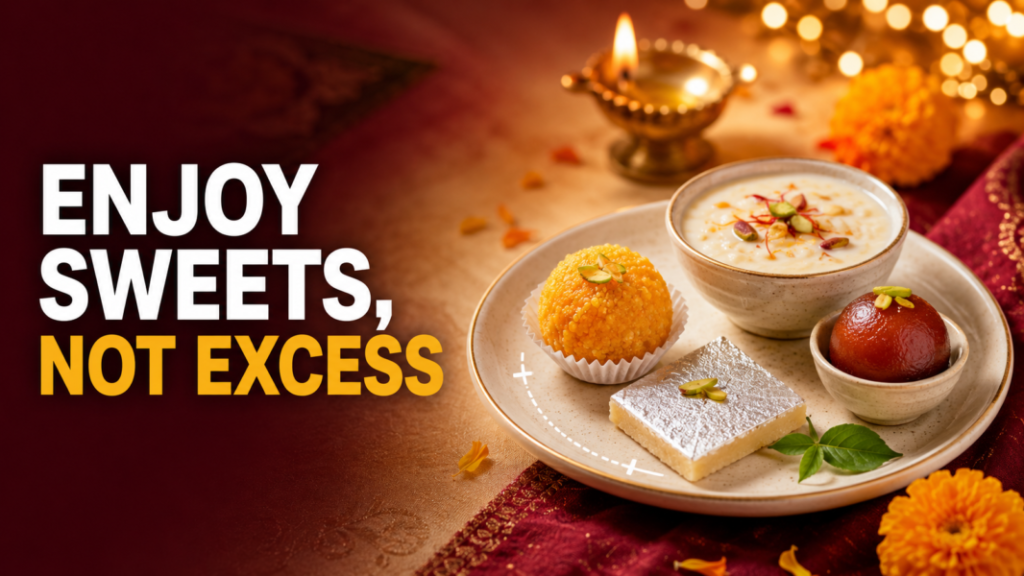
Festivals in India arrive with colour, family visits and boxes of sweets on almost every table. From modak and kaju katli to gulab jamun and laddus, food is part of the celebration.
This festive season health guide is not about saying no to every sweet. It is about enjoying the ones you truly like without turning one festive week into a month of mindless snacking.
Why Festive Eating Can Get Out of Hand
One piece of mithai is rarely the whole story. We may begin with a sweet offered during a puja, have another while visiting relatives, drink sweet tea, taste a fried snack and then eat dessert after dinner.
Each serving looks small, but the total rises quietly.
Many festival foods combine added sugar, refined flour and generous amounts of ghee or oil. Skipping lunch to “make space” for an evening feast can then leave you too hungry to stop after one serving.
How Much Sugar and Fat Is Too Much?
The World Health Organization advises adults and children to keep free sugars below 10% of daily energy intake. Going below 5%—roughly 25 grams or six teaspoons on a 2,000-calorie diet—may offer additional benefits.
Free sugars include sugar added during cooking or manufacturing, along with sugars in honey, syrups and fruit juice. They do not include the sugar naturally present in whole fruit or plain milk. Read the WHO sugar guidance.
India’s ICMR–National Institute of Nutrition advises adults to avoid sugar or restrict it to around 20–25 grams per day in its 2024 dietary guidance. This includes sugar from tea, coffee, desserts and packaged foods—not just the spoonfuls added at home. Read the Dietary Guidelines for Indians 2024.
Fat is not the enemy; our body needs it. Both quantity and type matter.
WHO advises adults to keep total fat around 30% or less of daily energy, saturated fat below 10%, and trans fat below 1%. Ghee, butter, cream and coconut or palm oil contain saturated fat. Fried foods and some bakery products may contain trans fat, particularly where partially hydrogenated fat is used. Read the WHO dietary-fat guidance.
These are whole-day targets. Tea, coffee, drinks and packaged foods count too.
Festive Season Health Guide: A Realistic Portion Guide for Indian Festive Foods
Sweet recipes and shop sizes vary widely, so no single calorie number fits every peda or laddu. Use the following portions as a visual guide.
| Festive item | Sensible tasting portion | Helpful approach |
|---|---|---|
| Barfi, kaju katli or peda | 1 small piece | Choose one favourite |
| Laddu or modak | 1 small piece or half a large one | Put it on a plate and eat slowly |
| Gulab jamun or rasgulla | 1 piece | Avoid taking extra syrup |
| Kheer, payasam or halwa | Around ⅓–½ cup | Use a small katori |
| Jalebi or fried sweet | 1 small piece | Do not pair it with another fried snack |
This is general guidance for healthy adults. Body size, activity, medical conditions and the rest of the meal also matter.
The “Choose One” Rule Works Better Than a Ban
A large festive spread creates the urge to sample everything. Try a simple rule: choose the one sweet you would genuinely miss and enjoy a small serving.
If you love homemade besan laddu, take that and leave the ordinary biscuits or packaged chocolates. If a relative is famous for payasam, enjoy a small bowl instead of eating two other desserts first.
Place your portion on a plate and move away from the sweet box. Eat slowly enough to notice when you feel satisfied.
Eat a Proper Meal Before Reaching for Mithai
Sweets are easier to control when you are not very hungry. Keep your regular breakfast and lunch even on a busy festival day.
A balanced plate might include:
- Half a plate of sabzi, salad or other non-starchy vegetables
- One quarter dal, chana, rajma, curd, paneer, eggs, fish or lean chicken
- One quarter rice, roti, millet or another grain
Protein and fibre help a meal feel more satisfying.
For people with diabetes, the CDC explains that eating carbohydrates with protein, fat or fibre can slow how quickly blood glucose rises compared with having carbohydrates alone. Having dessert with or just after a meal may also make a smaller amount feel sufficient. Read the CDC guidance on diabetes meal planning and enjoying dessert.
Watch the Drinks—They Are Easy to Miss
A sweet may feel special, but a sugary drink can disappear in minutes. Soft drinks, sweetened juices, milkshakes, flavoured coffee and repeated cups of sweet tea all add to the day’s free-sugar intake.
Keep water as the default.
Other options include unsweetened lemon water, plain soda with lime, chaas without added sugar, or tea and coffee with less sugar. Whole fruit is generally better than juice because it retains its natural fibre.
One useful compromise is to have the mithai or the sweet drink, rather than both at the same sitting.
Make Homemade Sweets Lighter
A homemade sweet is not automatically low in sugar or fat, but cooking at home gives you more control.
Try these small changes
- Reduce the added sugar gradually.
- Make smaller laddus, modaks or barfi squares.
- Measure ghee or oil instead of pouring it directly from the container.
- Add flavour using cardamom, saffron, nutmeg or cinnamon.
- Roast, steam or bake some snacks instead of deep-frying everything.
- Prepare a smaller batch and share the excess while it is fresh.
Nuts add nutrients and texture, but a dry-fruit laddu can still be easy to overeat.
“Natural Sugar” Is Still Sugar
Jaggery, honey, dates and coconut sugar are often promoted as guilt-free replacements. They may differ in flavour and contain small amounts of other nutrients, but jaggery and honey still contribute free sugar.
Replacing white sugar spoon-for-spoon does not turn a rich dessert into an unlimited food.
Dates or raisins add sweetness along with some fibre and nutrients when used whole. Yet a date-and-nut sweet can still pack substantial sugar and energy into a small portion.
The useful question is not, “Is this natural?” It is, “How much am I eating, and what else have I had today?”
Homemade mithai also needs portion control, and a walk does not cancel an unlimited feast.
Who Needs to Be More Careful?
People managing diabetes may not always require a complete festival ban, but portions and total carbohydrate need extra attention.
Jaggery, honey and dates can still raise blood glucose. Similarly, “no added sugar” does not mean carbohydrate-free.
Follow the meal plan and medicine schedule provided by your doctor or dietitian. Do not skip or change diabetes medicine to accommodate a feast.
If you use insulin or medicines that can cause low blood sugar, ask your care team how fasting, irregular meals or alcohol may affect you.
People with high cholesterol, high triglycerides, fatty liver, kidney disease or a prescribed diet should seek individual guidance. Festival sweets may also contain milk, nuts, sesame, wheat or other allergens.
What to Do After a Heavy Festival Meal
There is no need for a juice cleanse, starvation day or punishing workout.
Return to your usual meals, drink enough water, include vegetables and dal, and resume your normal activity. A relaxed walk after the meal can be a pleasant family habit if it is safe for you.
Divide or share leftover sweets instead of leaving an open box on the dining table.
One rich meal does not decide your health. The repeated pattern matters far more.
Frequently Asked Questions
Q1. Is it better to eat sweets in the morning?
There is no special time that makes sugar harmless. Portion size, frequency and the rest of your diet matter more. Dessert may be easier to control with or after a balanced meal.
Q2. Which Indian sweet has the least sugar?
Recipes differ too much for one answer. Ask about the ingredients, compare labels where available and focus on the portion size.
Q3. Are sugar-free sweets safe to eat freely?
No. They may still contain starch, saturated fat and plenty of calories. Some sugar alcohols can cause digestive discomfort when consumed in excess. People with diabetes should check total carbohydrate too.
Q4. Can I eat mithai every day during the festival week?
A small planned serving may fit into some healthy adults’ diets, but sugar from drinks and other foods also counts. Choose fewer occasions rather than eating each time you see the box.
Q5. What should I do if I overeat at one celebration?
Do not skip the next day’s meals. Return to your normal routine, stay hydrated and eat balanced food. If you have diabetes, follow the action plan provided by your healthcare team.
Further Reading
Fibermaxxing Diet: Is the Viral High-Fibre Food Trend Actually Healthy?
Are Healthy Packaged Foods Really Healthy? FSSAI Claim Check
Ultra-Processed Foods: Why People Are Returning to Real Home Food
Healthy Indian Food Combinations Explained: Dal Rice, Curd Jeera and Turmeric Pepper
High-Protein Indian Foods: Best Budget Options for Daily Health
Health Disclaimer
This article is for general informational and educational purposes only. It is not a substitute for professional medical advice, diagnosis or treatment. People with diabetes, heart or kidney conditions, food allergies, pregnancy-related concerns or prescribed diets should consult a qualified healthcare professional for personalized guidance.
Article Information
Author: Kartalks Editorial Team
Reviewed by: Kartalks Health Content Desk
Content Type: Festive season health guide, Indian sweets awareness, sugar control tips, fat intake awareness, portion control, lifestyle guidance, nutrition awareness, and general public health information
Sources: official public health references, nutrition awareness resources, food safety guidelines, wellness references, and official public sources
Last Updated: August 30, 2026