
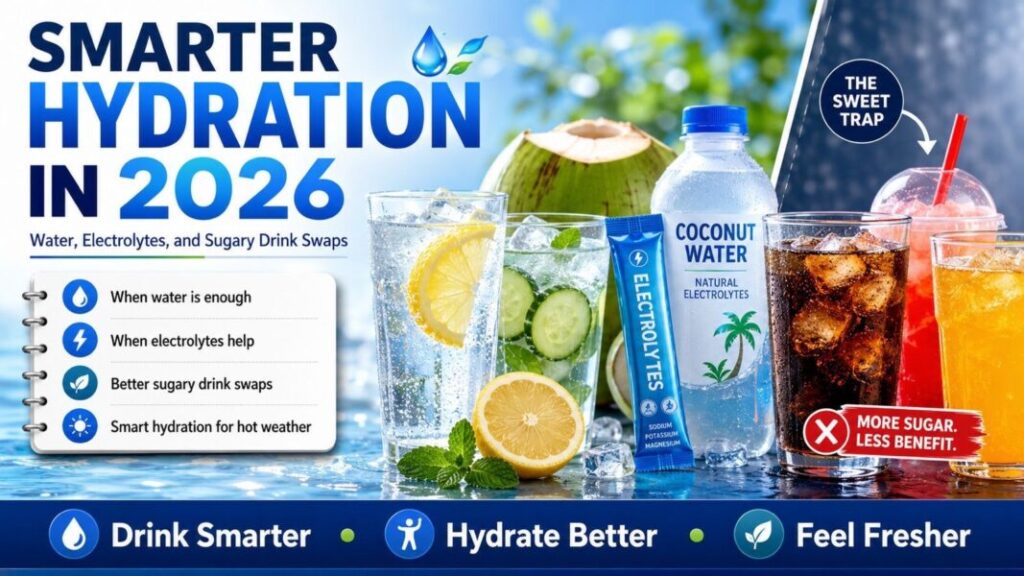
Smarter Hydration in 2026: Water, Electrolytes, and Sugary Drink Swaps
Staying hydrated sounds simple, but in real life it is easy to get pulled in the wrong direction. Many people now bounce between plain water, sports drinks, energy drinks, packaged juices, flavored waters, and sugary sodas without always knowing what their body actually needs. That is why smarter hydration in 2026 is less about drinking “more stuff” and more about choosing the right drink for the right situation. CDC says getting enough water each day is important for health, and drinking water can help prevent dehydration, which may cause unclear thinking, mood change, overheating, constipation, and kidney stones.
Article Information
Author: Kartalks Editorial Team
Reviewed by: Kartalks Health Content Desk
Content Type: Food, health, wellness, nutrition awareness, lifestyle tips, and general public health information
Sources: official public health references, nutrition awareness resources, food safety guidelines, wellness references, and official public sources
Last Updated: May 10, 2026
💧 Why smarter hydration matters now
A lot of people still think hydration only means “drink water when you feel thirsty.” That is too narrow. Good hydration helps your body regulate temperature, support digestion, and keep normal physical and mental function on track. CDC’s current guidance also makes a practical point many people overlook: water has no calories, so replacing sugary drinks with plain water can help reduce calorie intake.
That last point matters because the drink problem today is not always dehydration alone. It is often overdrinking the wrong beverages. CDC says water has zero calories, and replacing sugary drinks with unsweetened water can help reduce the amount of added sugars people drink. The agency also recommends healthier drink options such as water, unsweetened coffee or tea, milk and fortified dairy alternatives with no added sugars, and limited amounts of 100% juice.
🥤 Water is still the main drink
For most people on most days, water is still the best default. A recent CDC heat-health fact sheet says water is usually the best choice, although sports drinks containing electrolytes may sometimes be needed if someone has been sweating for several hours. That is a useful reality check, because hydration marketing can make it sound as if every normal day requires a special drink. It usually does not.
CDC’s “Rethink Your Drink” guidance keeps this practical. If plain water feels boring, the agency suggests unsweetened sparkling water or adding berries or slices of lime, lemon, or cucumber. If water still is not appealing, plain unsweetened milk is another option with nutritional value, and a small splash of 100% juice in sparkling water can be a lower-calorie way to make a fizzy drink feel more interesting.
⚡ What electrolytes actually do
Electrolytes are not a buzzword invented by sports-drink ads. They are real minerals that help your body function properly. MedlinePlus lists key electrolytes such as sodium, potassium, magnesium, calcium, and phosphate. It explains that sodium helps control the amount of fluid in the body and supports nerves and muscles, potassium helps cells, heart, and muscles work properly, and magnesium supports muscles, nerves, heart function, blood pressure, and blood glucose control.
In simple terms, water and electrolytes work together. MedlinePlus notes that when the amount of water in the body changes too much, electrolyte balance can also be affected. That is one reason dehydration is not always just about feeling thirsty. It can also affect how well your body handles normal internal balance.
🧃 Do you need an electrolyte drink every day?
Usually, no. This is where smarter hydration matters. CDC/NIOSH guidance says that for many people, especially during moderate activity, water is generally sufficient for hydration, and electrolytes lost in sweat can often be replaced through regular meals and salt-containing snacks. Another NIOSH hydration sheet says sports drinks are not usually necessary unless heavy sweating continues for more than about two hours and eating meals or snacks is not an option.
That means the average office day, short workout, or routine household activity usually does not require a special electrolyte beverage. If you are eating regular food and not sweating heavily for hours, plain water is often enough. Heavy use of sports drinks on ordinary days can simply add extra sugar and calories that you did not need. CDC/NIOSH explicitly warns that heavy consumption of sports drinks can add unnecessary calories because of added sugar.
🌡️ When electrolyte drinks can actually help
There are situations where electrolytes make more sense. If you are sweating heavily for a long time in the heat, doing prolonged exercise, or losing fluids because of vomiting or diarrhea, fluids with electrolytes can be useful. MedlinePlus says diarrhea is treated by replacing lost fluids and electrolytes to prevent dehydration. Its dehydration treatment guidance also notes that sipping water or drinking sports drinks containing electrolytes may help in some cases.
CDC’s recent heat-health fact sheet says sports drinks containing electrolytes may be necessary if sweating continues for several hours. The same fact sheet also advises people to limit beverages higher in sugars, sodium, and caffeine, which may contribute to dehydration risk in hot weather. In other words, electrolyte drinks can be useful tools, but they should be used selectively, not automatically.
🍭 Why sugary drinks deserve a rethink
Sugary drinks are one of the easiest places to improve hydration quality. CDC says replacing sugary drinks with water can reduce calorie intake, and its current sugar guidance says consuming too much added sugar can contribute to weight gain, obesity, type 2 diabetes, and heart disease.
FDA adds a helpful label-reading rule here. Its current guidance says the Daily Value for added sugars is 50 grams per day on a 2,000-calorie diet, which reflects the Dietary Guidelines recommendation to keep added sugars below 10% of total daily calories. That is important because sports drinks, energy drinks, sweetened teas, flavored coffees, and fruit drinks can push added sugars higher much faster than people expect.
This does not mean every sweet drink is forbidden forever. It means hydration should not depend on beverages that work against your overall nutrition goals. A drink can contain water and still be a weak hydration choice if it brings along too much sugar. CDC’s “Be Smart About Sugar” and “Rethink Your Drink” pages both push the same practical message: water first, sugary drinks less often.
🔄 Smarter sugary drink swaps
A good hydration strategy is not about perfection. It is about making easier swaps more often.
Better drink ideas for everyday life
- Swap regular soda for plain water, sparkling water, or water with lemon or berries.
- Swap fruit drinks or sweetened iced tea for unsweetened tea, chilled water, or sparkling water with a splash of 100% juice.
- Swap heavily sweetened sports drinks for water on normal days, and save electrolyte drinks for long heat exposure or prolonged heavy sweating.
- Swap dessert-like flavored beverages for plain milk or fortified unsweetened dairy alternatives when you want something more filling.
These swaps are simple, but they work because they reduce both unnecessary calories and unnecessary added sugar while still supporting fluid intake.
☀️ Hydration in hot weather: the smarter approach
Hot weather changes the equation. WHO says heat stress can worsen underlying illness, and CDC/NIOSH emphasizes that drinking enough fluids is one of the most important things you can do to prevent heat illness. Its hydration guidance also says it is easier to stay hydrated if you start the day hydrated rather than trying to catch up later.
There is another useful reminder in the NIOSH guidance: do not rely only on thirst. The agency notes that thirst can lag behind dehydration, especially during heat exposure and physical work. That is why smarter hydration in hot conditions means drinking regularly through the day instead of waiting until you already feel drained.
🚨 Signs you may be falling behind on hydration
MedlinePlus says symptoms of dehydration in adults can include feeling very thirsty, dry mouth, urinating and sweating less than usual, dark-colored urine, dry skin, tiredness, and dizziness. In more serious cases, symptoms can include confusion, very dark urine, rapid heartbeat, or rapid breathing.
Those warning signs matter because dehydration is easier to correct early than late. CDC also notes that dehydration can contribute to unclear thinking and overheating. So if you are feeling unusually tired, dizzy, mentally foggy, or noticing very dark urine in hot weather, your body may already be telling you that your hydration plan is not working.
✅ A practical everyday hydration routine
A smarter routine does not need to be complicated:
Morning
Start the day with water instead of waiting until late morning. CDC/NIOSH notes that being hydrated when you start work or activity makes it easier to stay hydrated through the day.
Through the day
Keep water as the main default drink. Use unsweetened options more often. Save sugary drinks for occasional use instead of everyday hydration.
During heat or long sweating
Drink more regularly. Consider electrolyte-containing fluids if sweating lasts for hours or if you are losing fluids through illness.
At night
Do not try to “catch up” with a huge amount all at once. Consistent fluid intake throughout the day is usually a better habit than random overdrinking later. This is an inference supported by CDC/NIOSH’s advice to drink regularly and consistently through heat exposure.
5 FAQs
1. Is water still the best drink for daily hydration?
Yes. CDC says water is usually the best choice, and it has no calories.
2. Do I need electrolyte drinks every day?
Usually not. Official guidance says many people can replace routine sweat losses with water plus regular meals and snacks.
3. When are electrolyte drinks more useful?
They can help during prolonged heavy sweating, heat exposure lasting hours, or fluid loss from vomiting or diarrhea.
4. Why should I cut back on sugary drinks?
CDC says too much added sugar is linked with weight gain, obesity, type 2 diabetes, and heart disease, and water can help reduce calorie intake when used as a swap.
5. What are common signs of dehydration?
Common signs include strong thirst, dry mouth, dark urine, urinating less, tiredness, and dizziness.
Further reading
Brain-Healthy Foods: Why the MIND Diet Is Getting More Attention in 2026
Sleep-Friendly Eating: What to Eat for Better Sleep in 2026
Plant-Based Diet 2.0: The New Era of Eating
Front-of-Pack Nutrition Labels: What New Food Labels May Mean for Shoppers in 2026
Low-Sodium Eating in 2026: Hidden Salt in Everyday Foods and Smarter Ways to Cut It
Sustainable and Local Food Movement: Why Climate and Health Are Finally Sharing the Same Plate
Bio-Engineered and Future Functional Foods: How Science Is Reshaping What We Eat
Clean Label And Natural Food Movement
Disclaimer
This article is for general educational purposes only and is not a substitute for medical advice. People with kidney disease, heart failure, severe vomiting or diarrhea, endocrine disorders, or other medical conditions that affect fluid balance should follow advice from a qualified healthcare professional.