
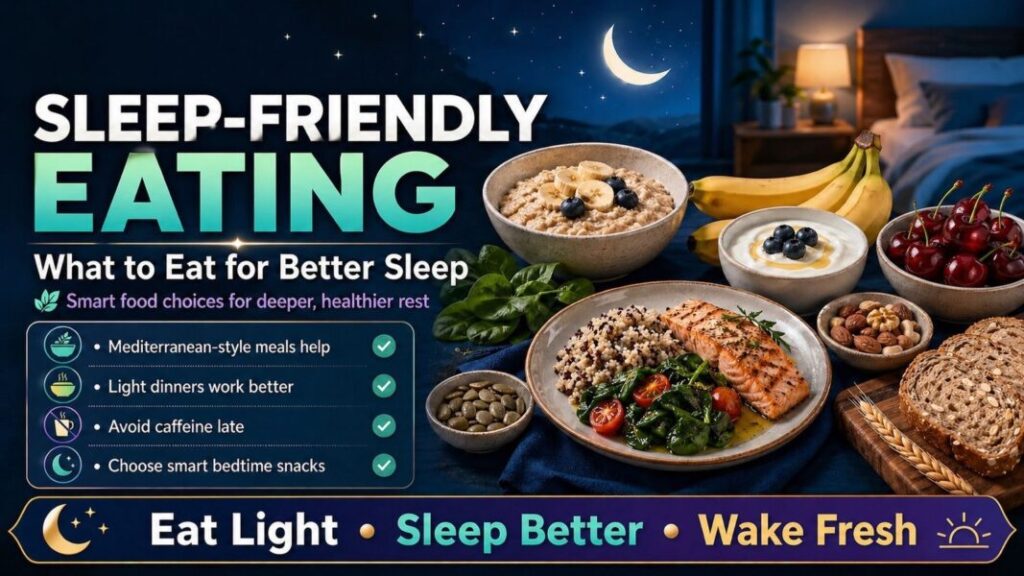
Sleep-Friendly Eating: What to Eat for Better Sleep in 2026
Article Information
Author: Kartalks Editorial Team
Reviewed by: Kartalks Health Content Desk
Content Type: Food, health, wellness, and general awareness content
Sources: public health references, nutrition awareness resources, official public sources, and general wellness information
Last Updated: Apr 26, 2026
Sleep-friendly eating is getting more attention in 2026 because sleep is no longer seen as just a night issue. It is now treated as a full health habit linked with heart health, mood, energy, weight, and daily performance. The National Heart, Lung, and Blood Institute says adults generally need 7 to 9 hours of sleep a night, and CDC says more than 1 in 3 American adults do not get the recommended amount.
That is where food enters the picture. No single food can “knock you out” in a healthy way, but your overall eating pattern, your meal timing, and what you avoid in the evening can all affect sleep quality. CDC recommends avoiding large meals, alcohol, and caffeine late in the day, while NHLBI advises regular meal timing and avoiding late-night dinners if you struggle with sleep.
🌙 Why Sleep-Friendly Eating Matters
Good sleep and good food often move together. CDC notes that sleep is not only about hours but also about quality, meaning sleep should be refreshing and not constantly interrupted. NHLBI also says that getting too little sleep is linked with more health problems, while CDC notes that lack of sleep over time can worsen major health issues.
That is why sleep-friendly eating should not be approached like a social-media trick. It is better to think of it as a pattern: eat in a way that supports stable energy during the day, avoids digestive discomfort at night, and helps your body settle into sleep instead of fighting it. The American Heart Association reported in 2025 that a healthy eating pattern through the day, especially one built around legumes, whole grains, fruits, vegetables, low-fat dairy, lean meats, fish, and olive oil, is linked with better sleep outcomes.
🥗 The Best Overall Pattern: Mediterranean-Style Eating
If there is one eating style that keeps showing up in sleep research, it is a Mediterranean-style pattern. A 2024 systematic review on Mediterranean diet and sleep concluded that current evidence suggests a relationship between stronger adherence to this eating pattern and better overall sleep quality and sleep features. The American Heart Association also summarized that people who follow this kind of pattern tend to sleep better, with legumes and whole grains standing out as especially helpful.
In simple terms, that means a sleep-friendly plate usually looks familiar and practical:
- more vegetables and fruit
- more beans, lentils, and whole grains
- more nuts and seeds
- healthier fats like olive oil
- moderate amounts of fish, dairy, and lean protein
- fewer highly processed foods and fewer sugary or greasy late-night meals
This is useful because it removes the pressure to hunt for one “sleep superfood.” Better sleep is more likely to come from a steady daily pattern than from one special bedtime ingredient.
🌾 Foods That Fit a Sleep-Friendly Eating Pattern
Whole grains and legumes
Whole grains and legumes are among the most practical foods to prioritize. The American Heart Association’s 2025 sleep-and-food coverage specifically highlighted legumes and whole grains as protective against sleep disorders. That gives you easy real-world options such as oats, brown rice, whole-grain bread, lentils, chickpeas, black beans, and dals.
These foods also tend to replace ultra-processed evening foods that are often heavier in added sugar, saturated fat, and sodium. That shift alone can make dinners and snacks easier on digestion and more consistent with healthy sleep habits. CDC specifically advises avoiding foods high in fat or sugar within a few hours of bedtime.
Nuts, seeds, leafy greens, and beans
These foods deserve a special mention because many are naturally rich in magnesium. The NIH Office of Dietary Supplements lists green leafy vegetables, legumes, nuts, seeds, and whole grains as good magnesium sources. Its 2026 fact sheet even gives examples such as pumpkin seeds, chia seeds, almonds, spinach, black beans, brown rice, oatmeal, yogurt, banana, and soy milk.
Magnesium often gets marketed as a sleep fix, but the smarter view is this: magnesium-rich foods are part of a healthy diet, and they are worth including anyway. The evidence for magnesium supplements specifically for sleep is still not strong. NCCIH says studies have shown mixed results, and many trials were small or low quality.
Fish, low-fat dairy, and light proteins
The American Heart Association’s summary of sleep-friendly dietary patterns includes fish, lean meats, and low-fat dairy within Mediterranean-style eating. These foods can fit well into a lighter dinner or a small evening snack, especially when paired with whole grains or fruit instead of fried or very rich foods.
For many people, a simple dinner such as grilled fish with vegetables and brown rice, or curd/yogurt with oats and fruit later in the evening, is more sleep-friendly than a very spicy takeaway meal, a greasy burger, or a heavy dessert. This is a practical inference based on CDC and NHLBI advice to avoid large meals, late-night dinners, and foods that can disturb sleep.
⏰ Meal Timing Matters More Than People Think
Even healthy food can become unhelpful if timing is poor. CDC says to avoid large meals and alcohol before bedtime, and NHLBI advises eating meals on a regular schedule and avoiding late-night dinners.
That means sleep-friendly eating is not only about what is on the plate, but also when the plate shows up. A huge dinner late at night may increase reflux, fullness, discomfort, and bathroom trips. The American Heart Association’s 2025 article also noted that eating too late or choosing spicy or acidic foods that worsen reflux can disrupt sleep.
A practical rule is:
- eat dinner earlier when possible
- keep very heavy meals away from bedtime
- if you are genuinely hungry later, choose a small, simple snack instead of a full second meal
☕ What to Avoid for Better Sleep
Caffeine late in the day
CDC recommends avoiding caffeine in the afternoon or evening, and NHLBI says to avoid caffeine close to bedtime. This includes not just coffee, but also some teas, energy drinks, cola, chocolate, and pre-workout products.
Alcohol near bedtime
Alcohol can make some people sleepy at first, but NHLBI says it tends to make sleep lighter than normal, increasing the chance of waking during the night. CDC also advises avoiding alcohol before bedtime.
High-fat, high-sugar, or very heavy evening foods
CDC’s heart-health sleep guidance specifically says not to eat or drink within a few hours of bedtime and to avoid alcohol and foods high in fat or sugar in particular. That is one of the clearest official reminders that late-night chips, desserts, fried foods, and rich packaged snacks may work against better sleep.
🍽️ Practical Sleep-Friendly Food Ideas
Here are realistic food ideas that fit the evidence better than trendy hacks:
Dinner ideas
- dal with brown rice and vegetables
- grilled fish with greens and whole grains
- chickpea salad with olive oil and yogurt
- oats or savory porridge with seeds and curd
Light evening snack ideas
- plain yogurt with oats
- banana with a small spoon of peanut butter
- whole-grain toast with nut butter
- a small bowl of curd with fruit
- a small handful of nuts and seeds
These are practical examples, not medical prescriptions. The main point is to choose foods that are lighter, less processed, and less likely to cause a blood-sugar spike, reflux, or digestive heaviness before bed. That principle follows directly from CDC, NHLBI, and AHA guidance.
🚫 What Not to Expect From Food Alone
Food can help, but it is not the whole answer. CDC and NHLBI both emphasize that good sleep also depends on a regular schedule, a dark and cool room, less evening screen exposure, physical activity during the day, and stress management.
And if sleep problems are ongoing, food changes alone may not be enough. NHLBI says long-term insomnia is often treated first with cognitive behavioral therapy for insomnia (CBT-I), not just supplements or guesswork. That matters because persistent trouble falling asleep, repeated waking, loud snoring, or daytime exhaustion may point to insomnia, sleep apnea, or another sleep disorder that needs proper evaluation.
✅ Final Take
The best answer to “what should I eat for better sleep?” is not a miracle food. It is a sleep-friendly eating pattern: more whole grains, legumes, vegetables, fruit, nuts, seeds, fish, and lighter meals; less caffeine late in the day, less alcohol near bedtime, fewer heavy late-night dinners, and fewer sugary or fatty bedtime snacks. The best-known pattern here is Mediterranean-style eating, which current evidence continues to link with better sleep quality.
In 2026, sleep-friendly eating is best understood as common-sense eating with better timing. Eat well through the day, keep evenings lighter, and stop expecting one food to do the job of an entire routine.
❓ 5 FAQs
Q1. What is the best diet pattern for better sleep?
A Mediterranean-style eating pattern is one of the strongest overall patterns linked with better sleep quality.
Q2. Are there any foods that are especially sleep-friendly?
Legumes, whole grains, nuts, seeds, leafy greens, fruit, and lighter protein options fit well into sleep-friendly eating.
Q3. Should I avoid coffee in the evening?
Yes. CDC recommends avoiding caffeine in the afternoon or evening, and NHLBI advises avoiding it close to bedtime.
Q4. Is alcohol okay if it helps me fall asleep?
Not really. NHLBI says alcohol may make you sleepy at first, but it tends to make sleep lighter and can increase nighttime waking.
Q5. Do magnesium supplements definitely improve sleep?
The evidence is still mixed. NCCIH says some studies suggest possible benefits, but many were small or low quality.
Further reading
Front-of-Pack Nutrition Labels: What New Food Labels May Mean for Shoppers in 2026
Low-Sodium Eating in 2026: Hidden Salt in Everyday Foods and Smarter Ways to Cut It
Sustainable and Local Food Movement: Why Climate and Health Are Finally Sharing the Same Plate
Bio-Engineered and Future Functional Foods: How Science Is Reshaping What We Eat
Plant-Based Diet 2.0: The New Era of Eating
7 No-Cook Breakfasts Recipes for Healthy and Budget Indian Mornings.
GLP-1 Influence on Diet and Health (2026): What It Means for Weight, Metabolism, and Everyday Eating
Disclaimer
This article is for general educational purposes only and should not be treated as medical advice. If you have chronic insomnia, loud snoring, breathing pauses during sleep, severe daytime sleepiness, reflux, anxiety, or ongoing sleep problems, please speak with a qualified healthcare professional.