
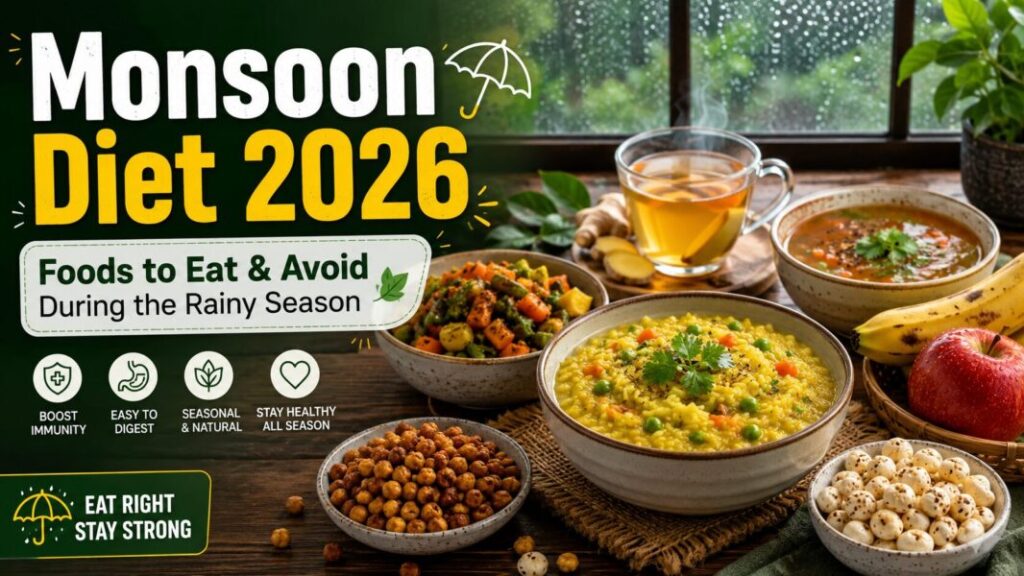
Monsoon Diet 2026: Foods to Eat and Avoid During the Rainy Season
The rainy season brings welcome relief from summer heat. It also brings cravings for hot pakoras, spicy chaat, tea and comforting bowls of khichdi.
But monsoon weather can make food handling slightly more difficult. High humidity may cause cooked food to spoil faster, fresh produce can carry mud and contamination, and unsafe water may increase the risk of stomach infections.
A sensible Monsoon Diet 2026 does not require expensive ingredients, detox drinks or complicated rules. The main goal is simple: eat freshly prepared, balanced meals while paying extra attention to cleanliness, cooking and storage.
Here is a practical guide to what you can eat, what deserves caution and how to enjoy the rainy season without making food unnecessarily restrictive.
Why Food Safety Needs More Attention During Monsoon
Rain itself does not make a particular food unhealthy. The bigger concern is how food is washed, prepared, stored and served.
Contaminated water, unwashed produce, undercooked food and poor refrigeration can allow harmful germs to reach your plate. The World Health Organization recommends five basic food-safety habits: keep food and hands clean, separate raw and cooked foods, cook thoroughly, maintain safe temperatures, and use safe water and raw materials.
These rules matter throughout the year, but they become especially useful during humid and rainy weather.
Food poisoning risk is generally higher with items such as raw or undercooked meat, poultry, seafood and eggs, unwashed produce, raw sprouts and unpasteurised products.
This does not mean you need to fear every meal outside your home. It simply means that freshness and hygiene should guide your choices.
Monsoon Diet 2026: Best Foods to Include
A rainy-season diet should still provide carbohydrates for energy, protein for muscle and tissue repair, vegetables and fruits for fibre and micronutrients, and enough fluids.
1. Freshly Cooked Dal, Khichdi and Simple Rice Meals
Moong dal khichdi is popular during the monsoon for a good reason. It is warm, easy to prepare and can provide carbohydrates and plant protein in one meal.
You can make it more balanced by adding:
- Carrots
- Beans
- Bottle gourd
- Pumpkin
- Peas
- Spinach that has been washed and cooked properly
A spoon of curd can be added if it is fresh, properly refrigerated and suits your digestion. During stomach upset, however, food choices should depend on the symptoms and medical advice.
Other practical meal options include dal-rice, vegetable pulao, sambar-rice and soft rotis with a freshly cooked sabzi.
2. Seasonal Vegetables, Properly Washed and Cooked
You do not need to stop eating vegetables during the rainy season. Vegetables remain an important part of a balanced diet.
The key is careful preparation.
Wash vegetables thoroughly under clean running water before cutting or cooking. Firm produce such as cucumber may be gently scrubbed, while damaged or bruised portions should be removed.
Leafy vegetables often carry more mud and may hide insects between their leaves. Separate the leaves, discard spoiled portions and rinse them several times with safe water. Cooking them thoroughly can provide another layer of protection.
Useful monsoon vegetables include:
- Bottle gourd
- Ridge gourd
- Snake gourd
- Pumpkin
- Carrot
- French beans
- Okra
- Brinjal
- Bitter gourd
Choose vegetables that look fresh rather than waterlogged, slimy or unusually soft.
3. Protein-Rich Foods
Protein helps make meals more filling and nutritionally complete.
Good everyday choices include:
- Dal and pulses
- Well-cooked eggs
- Paneer made from pasteurised milk
- Fresh curd stored under refrigeration
- Chicken cooked until completely done
- Fish cleaned and cooked thoroughly
- Soy chunks
- Roasted chana
Keep raw meat, fish and eggs separate from cooked foods, vegetables and ready-to-eat items. This reduces cross-contamination. Cooking animal foods properly and refrigerating leftovers promptly are standard food-safety measures.
Avoid tasting raw egg mixtures or partially cooked meat while preparing food.
4. Whole Fruits Instead of Roadside Cut Fruit
Fresh fruit can remain part of your monsoon diet.
Choose intact fruits that you can wash, peel or cut at home. Apples, bananas, oranges, guava, pomegranate and papaya are practical options depending on local availability.
Whole fruits are generally a better everyday choice than packaged juice because they provide fibre and are less likely to contain added sugar.
Wash fruits before eating or cutting them. Even fruits with peels should be washed first so that dirt or germs on the outer surface are not transferred through the knife.
Pre-cut fruit sold in the open deserves more caution. You may not know how long it has been sitting outside, whether clean water was used or whether it was kept at a safe temperature.
5. Warm Soups and Light Homemade Snacks
A bowl of vegetable, lentil, chicken or tomato soup can be comforting on a rainy evening.
Homemade soup also gives you control over salt, oil and hygiene. Avoid depending heavily on instant soup powders, which can contain considerable sodium.
For snacks, consider:
- Roasted makhana
- Roasted chana
- Steamed corn prepared hygienically
- Idli
- Dhokla
- Vegetable poha
- Besan chilla
- Boiled groundnuts
- Homemade vegetable cutlets cooked with limited oil
Pakoras are not forbidden. Enjoying a small portion occasionally is different from making deep-fried food a daily monsoon habit.
6. Ginger, Garlic and Common Indian Spices
Ginger, garlic, turmeric, pepper, jeera and ajwain can add flavour to monsoon meals.
They may contain plant compounds studied for various biological effects, but ordinary culinary use should not be presented as a cure for infections. Adding ginger to tea or garlic to dal may make food enjoyable; it does not replace medical treatment.
Use spices in amounts that suit your digestion. Too much chilli, pepper or masala may worsen acidity, burning or stomach discomfort in some people.
7. Safe Drinking Water and Regular Fluids
People often drink less water during cool or cloudy weather because they do not feel as thirsty. Your body still needs fluids.
Water is an affordable and healthy hydration choice. Milk, tea, coffee and some water-rich foods can also contribute to fluid intake, although sugary beverages should be limited.
Use a reliable source of drinking water. If local water safety is uncertain, follow the purification method recommended for your area, such as an appropriate filter or boiling.
You may need additional fluids if you have fever, vomiting, diarrhoea, heavy sweating or prolonged physical activity. Dark urine, dizziness, dry mouth and passing urine less frequently can be signs of dehydration.
Simple Monsoon Meal Plan for an Indian Household
This is only a general example. Portions should be adjusted for age, activity, health needs and appetite.
| Time | Practical meal idea | Simple tip |
|---|---|---|
| Breakfast | Idli-sambar, poha or vegetable upma | Serve freshly prepared |
| Lunch | Rice or roti, dal, cooked sabzi and curd | Refrigerate leftovers promptly |
| Evening | Tea with roasted chana or makhana | Keep fried snacks occasional |
| Dinner | Moong dal khichdi, soup or roti-sabzi | Choose a light but balanced meal |
People with diabetes, kidney disease, food allergies, digestive disorders or other medical conditions may need an individualised eating plan.
Foods to Avoid or Handle Carefully During Monsoon
The word “avoid” does not always mean that a food is inherently harmful. In many cases, the concern is uncertain hygiene, prolonged storage or incomplete cooking.
Roadside Cut Fruits, Raw Chutneys and Salads
Food served raw cannot rely on cooking to destroy germs.
Be cautious with roadside fruit plates, raw onion, open salads, pani puri water and fresh chutneys if you are unsure about the water source or storage conditions.
Food that is cooked and served steaming hot is generally a safer choice than raw food of uncertain hygiene.
Food Left at Room Temperature for Too Long
Do not judge food safety only by smell or appearance. Harmful contamination may not always cause an obvious change.
Cook only what the household is likely to finish, especially during humid weather. Refrigerate perishable leftovers promptly in clean, covered containers.
Repeatedly warming and cooling the same dish is not a good routine. Reheat only the amount you plan to eat and heat it thoroughly.
Undercooked Eggs, Meat, Fish and Seafood
Soft or runny eggs, partially cooked kebabs, raw seafood and undercooked chicken carry a higher food-safety risk.
Choose fully cooked preparations, especially for pregnant women, young children, adults over 65 and people with reduced immunity. These groups have a greater risk of serious illness from food poisoning.
Raw Sprouts
Raw or lightly cooked sprouts may carry harmful germs because the warm and humid conditions used for sprouting can also support bacterial growth.
Cooking sprouts properly is a safer option, particularly for people in higher-risk groups. Raw sprouts are specifically included among foods with a greater risk of foodborne illness.
Unpasteurised Milk and Dairy Products
Use pasteurised packaged milk or milk that has been handled according to safe local practices.
Avoid milk products that smell sour, have been left outside refrigeration or come from a source with doubtful hygiene. The same caution applies to cream-based sweets, paneer dishes and curd-based foods kept at room temperature for long periods.
Too Many Fried and Sugary Foods
Rainy weather may make samosas, bajjis and jalebis especially tempting. There is space for occasional treats, but frequent large portions can increase calorie, salt, sugar and saturated-fat intake.
Try sharing a plate, ordering a smaller portion or pairing the snack with a proper meal rather than continuously eating fried foods with tea.
Deep-fried street food can also be a concern when oil quality, ingredient storage and food handling are uncertain.
Foods You Do Not Need to Ban
Monsoon nutrition advice is often filled with strict rules that are not always supported by evidence.
“Never Eat Leafy Vegetables During Monsoon”
Leafy greens do not automatically become unhealthy because it is raining. The practical concern is that they may contain mud, insects or contaminated water.
Buy fresh leaves, clean them carefully and cook them properly. Throw away wilted, slimy or spoiled leaves.
“Curd Always Causes Cold”
Curd does not cause a viral cold. A cold is caused by viruses, not by eating refrigerated dairy.
Some people may notice throat discomfort, lactose intolerance or digestive symptoms after consuming certain dairy products. That is an individual response rather than a universal monsoon rule.
“Herbal Tea Prevents All Seasonal Infections”
Ginger, tulsi or spice-based tea can be soothing and may help you feel warm. It cannot guarantee protection against infection.
Sleep, food hygiene, handwashing, safe water and timely medical care remain more meaningful health practices.
“You Need a Detox Diet During Rainy Season”
Your liver, kidneys, lungs and digestive system already handle the body’s waste-removal processes.
Juice cleanses or highly restrictive plans are unnecessary for most healthy adults and may provide too little protein, fibre or energy.
Everyday Monsoon Food-Safety Checklist
A few habits can prevent many avoidable problems:
- Wash hands before cooking and eating.
- Use safe water for drinking, ice and food preparation.
- Rinse fruits and vegetables under running water.
- Keep raw meat and eggs away from ready-to-eat food.
- Cook eggs, poultry, meat and seafood thoroughly.
- Eat freshly prepared food whenever possible.
- Refrigerate perishable leftovers promptly.
- Discard mouldy, slimy or suspicious-smelling food.
- Keep kitchen cloths, chopping boards and containers clean.
- Avoid food exposed to flies, dirty water or overflowing drains.
These steps reflect the widely recommended food-safety approach of cleaning, separating, cooking and chilling food correctly.
Who Should Be Extra Careful?
Foodborne illness can affect anyone, but certain people may become more seriously unwell.
Extra precautions are sensible for:
- Pregnant women
- Children below five years
- Adults aged 65 and above
- People undergoing cancer treatment
- Organ-transplant recipients
- People using immune-suppressing medicines
- Anyone with a condition that weakens immunity
For these groups, avoiding unpasteurised products, raw sprouts, undercooked eggs and incompletely cooked meat is particularly relevant.
Persistent vomiting, blood in stools, severe abdominal pain, high fever, confusion, very low urine output or signs of significant dehydration require medical attention.
FSSAI – Food Safety During Monsoon
Frequently Asked Questions
Q1. What is the best food to eat during the rainy season?
There is no single best food. Freshly cooked dal, rice, roti, khichdi, vegetables, eggs, properly cooked meat, whole fruits and safe drinking water can all be part of a healthy monsoon diet.
Q2. Can we eat curd during monsoon?
Yes, most people can eat fresh curd during monsoon. It should be prepared hygienically, stored under refrigeration and consumed before it spoils. People with lactose intolerance or a medical restriction may need an alternative.
Q3. Is street food completely unsafe during the rainy season?
Not every street-food outlet is unsafe, but hygiene can be difficult to judge. Prefer busy, clean outlets where food is cooked in front of you and served piping hot. Be more careful with raw salads, cut fruit, chutneys, ice and water-based snacks.
Q4. Which fruits should be avoided during monsoon?
You do not need to avoid a particular fruit simply because it is monsoon. Choose fresh, intact fruits, wash them properly and cut them at home. Avoid rotten, bruised or pre-cut fruit kept in the open.
Q5. What should I drink if I have diarrhoea during monsoon?
Fluids are needed to replace water losses. Oral rehydration solution may be appropriate, especially when diarrhoea is frequent, but it should be prepared and used correctly. Children, older adults, pregnant women and anyone with severe symptoms should receive professional medical advice promptly.
Final Thoughts
A healthy Monsoon Diet 2026 is less about banning foods and more about making safer choices.
Eat balanced home-cooked meals, wash produce properly, use safe water, cook animal foods thoroughly and be selective about food prepared outside. You can still enjoy seasonal favourites—just pay attention to freshness, portion size and hygiene.
Further Reading
Ultra-Processed Foods: Why People Are Returning to Real Home Food
Best High-Protein Dals in India: Which Dal Gives More Protein?
Healthy Indian Food Combinations Explained: Dal Rice, Curd Jeera and Turmeric Pepper
🧘♀️ Mindful Eating and Mental Wellness: How a Calm Plate Heals the Mind
Health Disclaimer:
This article is intended for general informational and educational purposes only. It is not a substitute for professional medical advice, diagnosis or treatment. Consult a qualified healthcare professional for guidance related to symptoms, chronic illness, pregnancy, medicines or individual dietary needs.
Article Information
Author: Kartalks Editorial Team
Reviewed by: Kartalks Health Content Desk
Content Type: Food, health, wellness, nutrition awareness, lifestyle tips, seasonal health guidance, and general public health information
Sources: official public health references, nutrition awareness resources, food safety guidelines, wellness references, and official public sources
Last Updated: August 2, 2026