
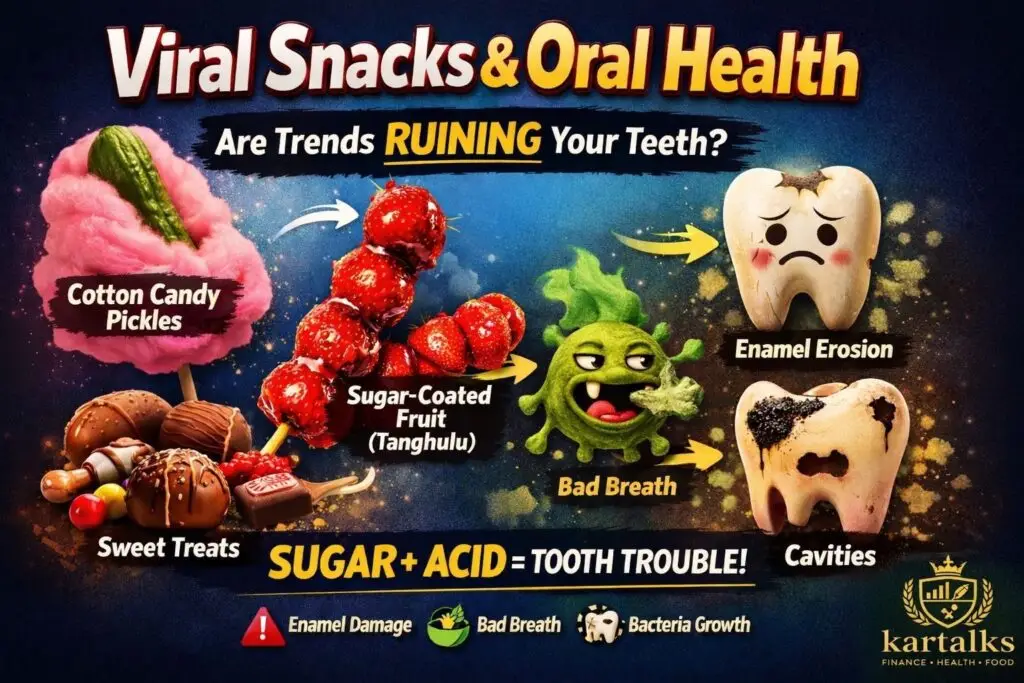
Viral Snacks & Oral Health: Hidden Damage to Your Teeth.
Social media has a talent for making food look irresistible. One week it’s shiny fruit candies, the next it’s a sweet-and-sour “hack” that everyone must try. These viral snacks are fun, colorful, and camera-ready—but your teeth don’t care about aesthetics. They care about sugar, acid, stickiness, and how often you snack.
In this article, we’ll break down how viral foods can quietly harm your mouth, why bad breath suddenly becomes a thing, and how you can enjoy trends without paying for them at the dentist’s chair.
🦷 Why “Viral Snacks & Oral Health” Are Connected (And It Matters)
When you eat or drink something sugary, the bacteria in your mouth feed on those sugars and produce acids. Those acids can start weakening enamel—the outer protective layer of your teeth. If you repeat that cycle often enough, you increase the risk of cavities and enamel erosion. Research and dental guidance consistently highlight that how frequently you consume sugar (snacking all day, sipping sweet drinks) can matter a lot for cavity risk.
Now add two “viral” factors:
Sticky coatings (sugar shells, syrups, caramel-like layers) that cling to teeth longer.
Acidic ingredients (vinegar, citrus, sour powders, sodas) that can soften enamel.
This combo is exactly why many viral snacks become a perfect storm for dental problems.
🍭 The Viral Snack Pattern Dentists Worry About
Not every trend is harmful. The real problem is the common pattern behind many viral foods:
High sugar
High acid
Sticky texture
Frequent snacking (because it’s “just a small bite” repeated many times)
Dental guidance often emphasizes reducing the amount and frequency of carbohydrate/sugar exposure, and limiting sugary snacks between meals as a practical caries-prevention step.
🧪 What’s Happening in Your Mouth After a Trendy Treat?
Think of your mouth like a mini ecosystem. After you eat sugar:
Bacteria metabolize it → produce acid
Acid lowers mouth pH → enamel becomes more vulnerable
If this happens repeatedly → enamel doesn’t get enough recovery time
The frequency issue is critical: repeated sugar hits keep the mouth in a more “acidic” state longer. The ADA’s nutrition guidance discusses the role of snacking frequency and sugar exposure in caries risk.
And if your snack is also acidic (vinegar, lemon, sour candy powders), it can soften enamel further, making brushing immediately afterward a bad idea (more on this below).
🥒 1) Cotton Candy Pickles & Sour-Sweet Hacks: Sugar + Acid Double Attack
One viral trend that keeps popping up is the sweet-and-sour mashup—like cotton candy pickles. It sounds funny, it photographs well, and it hits every “viral” note: shock value + color + crunch.
The concern? You’re combining sugar and acid (vinegar) in one go. Some media coverage summarizing dental expert concerns flags this exact kind of snack as potentially disruptive to oral balance and linked with bad breath, enamel issues, and bacterial growth when consumed frequently.
Why it’s risky:
Acid exposure can weaken enamel
Sugar feeds acid-producing bacteria
If you snack repeatedly, your teeth stay under attack longer
🍬 2) Tanghulu (Sugar-Coated Fruit): Pretty, Crunchy… and Sticky Trouble
Tanghulu—fruit coated in a hardened sugar shell—looks stunning on camera. The problem is that “glass candy” coating can crack into pieces that stick in grooves, between teeth, or around dental work.
This is less about fruit (fruit is fine) and more about the dense, sticky sugar layer. Reports highlighting viral snack risks call out tanghulu specifically because the sugar coating can cling to teeth and increase decay risk if it becomes a frequent habit.
Extra risk: if you have braces, aligners, crowns, or sensitive enamel, sticky sugary foods can be even more of a problem.
🍫 3) Ultra-Sweet “Luxury” Chocolates: A Plaque-Friendly Habit
Trendy “luxury” chocolates (often rich, creamy, sweet, and eaten mindlessly while scrolling) can become a daily habit—especially when the internet turns them into a must-try item. Again, the core issue isn’t “chocolate is forbidden.” It’s high sugar + frequent snacking + poor timing.
Dental guidance commonly advises limiting sugary snacks—especially between meals—and focusing on consistent oral hygiene practices.
😮💨 Bad Breath After Viral Snacks: What’s the Real Reason?
Bad breath isn’t only about onions or garlic. It’s often a bacterial story.
When sugary snacks feed bacteria, those bacteria can multiply in plaque biofilms and create compounds that contribute to odor. Combine that with a dry mouth (common if you snack on sugary foods without water), and the smell gets worse.
So if you notice bad breath after a trend-heavy week on social media snacks, it’s not your imagination—your mouth environment likely shifted in a direction you don’t want.
🧴 The Biggest Mistake People Make: Brushing Right After Acidic Snacks
If you eat something very acidic (vinegar, lemon, sour candy), your enamel can temporarily soften. Brushing immediately can be rougher on enamel than you think.
A practical tip you’ll often hear from dental professionals: rinse with water, wait a bit, then brush later. Consumer health guidance discussing dental care commonly recommends waiting around 30 minutes after acidic exposure before brushing, to give enamel a chance to reharden.
✅ How to Enjoy Viral Snacks Without Ruining Your Teeth
You don’t need to quit social media or ban every sweet treat. You just need smart rules.
🛡️ 1) Keep Viral Snacks to “Sometimes,” Not “Everyday”
The more frequent the sugar exposure, the higher the caries risk. Dental and scientific sources consistently emphasize frequency as a major factor in decay development.
🍽️ 2) Eat Sweets With Meals (Not as All-Day Bites)
Meals stimulate saliva, and saliva is protective. Snacking repeatedly keeps the acid cycle going.
💧 3) Rinse With Water Right After
Water helps wash away sugars/acids and supports saliva flow.
🦷 4) Use Fluoride Toothpaste and Don’t Skip Flossing
Fluoride supports enamel strength. Routine brushing and interdental cleaning matter most when your diet includes sugar exposures.
🍬 5) Choose “Less Sticky” Treats When Possible
Sticky sugar is harder to clear. If you’re going to indulge, avoid the ones that cling.
🍃 6) Consider Sugar-Free Gum (Xylitol) After Eating
The ADA notes xylitol gum can promote salivary flow and supports remineralization (and xylitol can’t be metabolized by cariogenic bacteria the same way).
👨👩👧 Kids + Viral Snacks: Why It’s a Bigger Deal
Kids’ teeth are more vulnerable, and viral snacks are often marketed in bright colors that appeal to them. Pediatric dental guidance notes that frequent between-meal sugar exposure can place children at higher caries risk.
If you’re a parent, you don’t need to be strict—just be structured:
Make sweet treats a planned snack time
Water afterward
Brush later, not immediately after acidic foods
🧠 Quick Checklist: “Is This Viral Snack Risky for Teeth?”
If the answer is “yes” to two or more, treat it as an occasional indulgence:
Is it sticky?
Is it very sugary?
Is it acidic/sour/vinegar-based?
Do you eat it often or between meals?
Do you sip a sweet drink alongside it?
Final Thought
Trendy food isn’t the enemy—mindless repetition is. The moment a viral snack becomes a daily habit, your teeth start keeping score. Follow the simple rules (timing, water, fluoride, fewer snack attacks), and you can enjoy the internet without turning your mouth into a repair project.
👉Further reading
🥗 Beetroot Cutlets (High-Fibre, Iron-Rich & Perfect for Evening Snack)
Blood Sugar Friendly Diet for Everyday Health
Metabolic Fitness: The Health Shift Everyone’s Quietly Making in 2025
Blood Sugar Friendly Diet for Everyday Health
Disclaimer
This article is for general information and education only and does not replace professional medical or dental advice. For personal guidance, consult a qualified dentist or healthcare professiona