
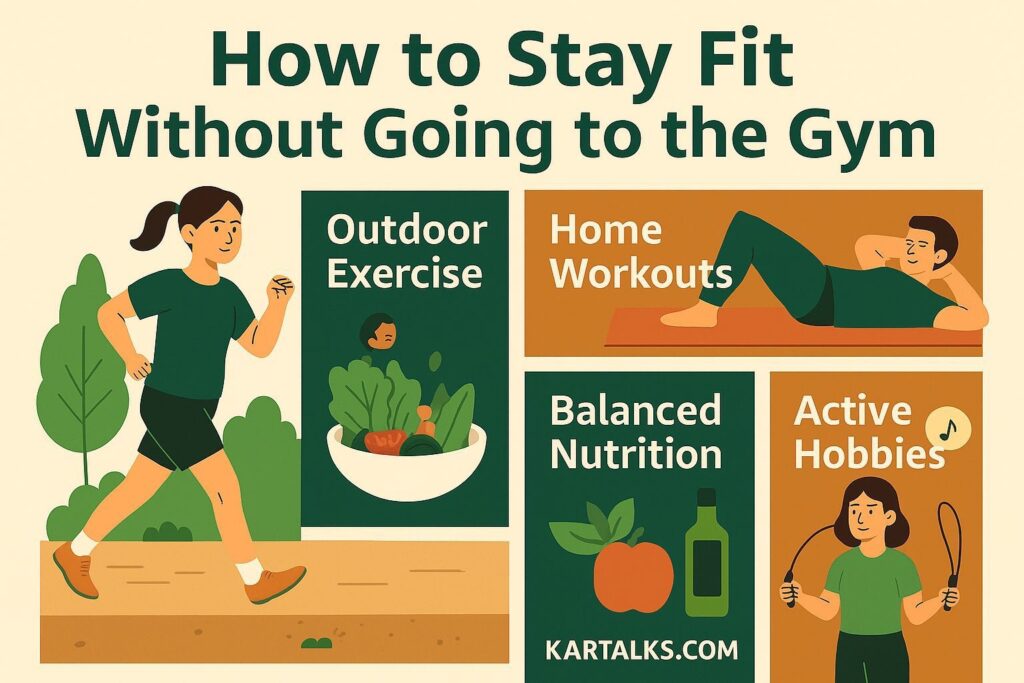
There was a time when “fitness” meant six-pack abs, tiny waists, and spending hours in the gym.
Now, more people are asking a different question:
“How can I stay fit, strong and healthy… while also managing work, family, stress and real life?”
Good news — modern fitness is shifting.
It’s no longer about punishment or obsession.
It’s about energy, mobility, strength, mental health, and long-term health, not just how you look in a mirror.
This article is your practical, no-drama guide to getting fitter using simple, sustainable habits you can actually stick to.
You don’t need fancy machines.
You don’t need 2-hour workouts.
You just need consistency, a bit of structure, and a kinder approach to your own body.
1. Fitness Today: It’s Less About Looks, More About Longevity
If you scroll social media now, you’ll notice a big shift:
People are talking about strength, mobility, steps, sleep, metabolism, mental health — not just “summer body” pressure.
Fitness is becoming about:
- Living without constant fatigue
- Reducing lifestyle diseases (diabetes, BP, PCOS, fatty liver)
- Being able to walk fast, lift things, climb stairs
- Feeling confident in your body
- Protecting your joints and back
That means your workout plan doesn’t need to be extreme.
It just needs to be consistent and smart.
2. Walking: The Most Underrated Fat-Burning Exercise
You don’t need to start with burpees and box jumps.
The simplest, most powerful habit? Walking.
Regular walking helps:
- Burn calories steadily
- Improve heart health
- Reduce stress hormones
- Clear the mind
- Support joint health
If you’re just starting:
- Aim for 6,000–8,000 steps a day to begin
- Break it into small chunks: morning, lunch break, after dinner
- Use stairs where possible
- Take walking calls instead of sitting calls
Walking is gentle, free, and realistic — especially if you sit at a desk all day.
3. Strength Training: The Real “Anti-Aging” Tool
Cardio is good, but if you ignore strength training, you’re skipping a big part of fitness.
Strength training doesn’t mean heavy bodybuilding. It means:
- Squats
- Lunges
- Push-ups (even on a wall)
- Resistance bands
- Dumbbells or bodyweight exercises
Why it matters:
- Builds lean muscle (which burns more calories at rest)
- Protects joints and bones
- Helps your posture
- Reduces injury risk
- Supports women’s metabolism and hormones
You don’t have to train daily.
2–3 days per week is enough to see progress if you keep it consistent.
Example weekly structure:
- Day 1: Upper body (push-ups, rows, shoulder press)
- Day 2: Lower body (squats, glute bridges, lunges)
- Day 3: Full body mix + core
Think of strength training as future-proofing your body.
4. Short Workouts Work — You Don’t Need 1 Hour
A big reason people quit is this thought:
“If I don’t have 1 hour, it’s not worth it.”
That’s simply not true.
You can benefit even from 15–25 minute sessions, especially if you’re consistent.
You can try:
- 20-minute brisk walk + 5 minutes stretching
- 15-minute bodyweight circuit at home
- 10-minute morning mobility + 10-minute evening strength
Micro-workouts spread through your week are better than one big “perfect workout” that never happens.
5. Mobility & Stretching: Your Joints Need Attention Too
Modern life = long sitting, phone neck, tight hips, stiff shoulders.
If you don’t move your joints, you might feel “old” even at 25:
- Back pain
- Tight neck
- Heavy legs
- Stiff ankles
Add simple daily mobility:
- Neck rolls
- Shoulder circles
- Hip openers
- Ankle circles
- Gentle spinal twists
Even 5–10 minutes a day of stretching or light yoga can reduce stiffness and headaches and make every workout feel smoother.
6. Food: You Can’t Out-Train a Poor Diet
You don’t need to eat perfectly.
But if 80–90% of your weekly food is:
- deep-fried
- sugary drinks
- packaged snacks
- oversized portions
Then your workouts will always feel like a struggle.
Think of food as support for your workouts:
- Add protein: eggs, dal, paneer, fish, lean chicken, curd, lentils
- Add fiber: vegetables, fruits, oats, millets, salads, legumes
- Add good fats: nuts, seeds, olive oil, coconut in moderation
- Drink enough water: your body can’t perform well when dehydrated
You don’t have to cut all your favourites.
Instead, try this simple rule:
Upgrade, don’t punish.
Swap some junk, add more real food, and watch your energy change.
7. Sleep & Recovery: The Hidden Side of Fitness
You can do the “perfect workout plan,” but if you’re sleeping 4–5 hours, constantly stressed, and never allowing rest, results will be slow.
During sleep:
- Muscles repair
- Hormones balance
- Appetite hormones reset
- The brain detoxes
Try aiming for:
- 7–8 hours of quality sleep
- Reducing heavy meals right before bed
- Staying away from screens at least 30 minutes before sleeping
- Creating a relaxing night ritual: light stretching, warm shower, reading
Rest is not laziness — it’s part of training.
8. Mental Fitness: Your Mind Can Make or Break Your Routine
Fitness is not just “physical.”
You might notice:
- Some days you don’t have physical energy
- Many days you do have energy — but no motivation or you feel low
That’s where mindset and mental health come in.
What helps:
- Setting small, realistic goals
- Tracking progress (steps, workouts, mood)
- Not comparing your journey with others
- Celebrating non-scale victories: better sleep, less breathlessness, better mood, jeans fitting better
- Moving your body on bad days even for 5–10 minutes
Exercise itself is proven to reduce symptoms of anxiety and depression.
So even a small walk or simple mobility session can be medicine for the mind.
9. Home Workouts, Gym, or Outdoors? Choose What You’ll Actually Do
There’s no “correct” place to work out. The best choice is the one you’ll stick to.
- Gym:
Great for equipment, structure, and strength training.
Best if you like an environment that pushes you. - Home workouts:
Great for busy schedules, parents, introverts, and rainy days.
Use bodyweight, resistance bands, or dumbbells. - Outdoor movement:
Walking, running, cycling, sports, yoga in the park.
Adds fresh air, sunlight, and mental relaxation.
You can mix all three.
For example:
- Walk outdoors daily
- Strength train at home 2–3 days
- Visit gym if you enjoy machines or classes
There are no rules except: keep moving.
10. Consistency Over Perfection: The Real Secret
There will be days when:
- You skip your workout
- You eat too much
- You feel lazy or unmotivated
That doesn’t mean you failed.
It just means you’re human.
The people who actually get results aren’t the ones who never fall off — they’re the ones who return to the routine quickly after they slip.
Instead of chasing perfection, ask:
- “What is one small healthy thing I can do today?”
Maybe it’s:
- A 15-minute walk
- A quick stretch
- A glass of water instead of cola
- A better breakfast
- Sleeping 30 minutes earlier
These small daily wins build a strong, fitter you over months — without extremes.
Final Thoughts: Make Fitness Fit Your Life, Not the Other Way Around
Fitness doesn’t have to look like punishment.
It doesn’t need to be an all-or-nothing project.
If you:
- Walk more
- Move your joints
- Eat more real food
- Strength train a few times a week
- Drink water
- Sleep well
- Forgive yourself on off days
…you are already doing more than most people.
You don’t need to be perfect.
You just need to keep showing up in small ways, over and over again.
That is real fitness.
That is the kind of lifestyle that protects your heart, your mind, your joints, and your future.
And the best part?
You can start today — with whatever you have, wherever you are.
Further reading 👇
🥗 Beetroot Cutlets (High-Fibre, Iron-Rich & Perfect for Evening Snack)
Sustainable Fitness: A Beginner’s Playbook
THE RISE OF DIY DIGITAL HEALTH|kartalks
🧘♀️ Mindful Eating and Mental Wellness: How a Calm Plate Heals the Mind
✔️🥑 Functional Foods and Supplements guide
https://www.hsph.harvard.edu/nutritionsource/staying-active/