
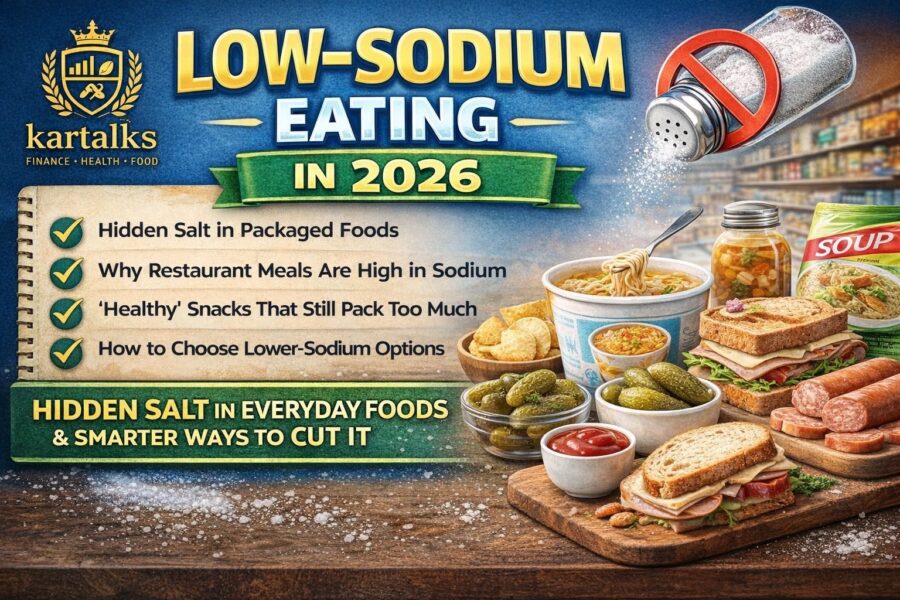
Low-Sodium Eating in 2026 is no longer just a topic for people already dealing with high blood pressure. It has become a practical, everyday health habit for anyone who wants to eat better, reduce dependence on ultra-processed food, and make smarter choices in a world where hidden salt is everywhere.
The tricky part is this: most people still think the main problem is the salt shaker on the dining table. In reality, the bigger issue is the sodium already packed into foods before they even reach your plate.
WHO recommends that adults keep sodium below 2,000 mg per day, which is equal to less than 5 grams of salt a day, and it continues to treat sodium reduction as a major public-health priority because high sodium intake raises blood pressure and increases cardiovascular risk.
🧂 Why Low-Sodium Eating Matters More in 2026
This topic feels especially important right now because the global burden is still huge. WHO said in 2025 that mean global sodium intake remained about 4.3 grams per day in 2019, which is more than double its recommended limit, and that roughly 1.9 million deaths each year are linked to high sodium intake. That is why sodium reduction is still one of the most practical nutrition strategies for preventing high blood pressure, heart disease, and stroke.
This is also not just a “junk food” problem. CDC says average sodium intake in the United States is still above 3,400 mg a day, well above the recommended limit of less than 2,300 mg for teens and adults. The same CDC guidance also makes an important point that applies globally: most sodium in the diet comes from packaged and restaurant foods, not from a dramatic amount of salt sprinkled at the table.
🥫 The Hidden Salt Problem Most People Miss
One of the biggest misunderstandings in nutrition is that salty-tasting food is the only food to worry about. It is not. FDA says more than 70% of dietary sodium comes from packaged and prepared foods. That means even foods that do not taste aggressively salty can quietly push sodium intake too high over the course of a day.
Bread is a classic example. CDC notes that foods with moderate amounts of sodium, such as bread, can become major sodium sources simply because people eat them so often. A sandwich may not taste as salty as chips or pickles, but bread, cheese, processed spreads, sauces, and fillings together can turn one quick meal into a heavy sodium load.
🍜 Everyday Foods Where Sodium Hides
If you want to follow Low-Sodium Eating in 2026, these are the foods worth watching closely:
Low-Sodium eating in 2026: Packaged foods
Packaged soups, instant noodles, ready-to-eat meals, crackers, flavored nuts, frozen snacks, breakfast items, and processed meats often carry a heavy sodium load because salt improves taste, shelf life, and texture. FDA points clearly to packaged foods as a major source of excess sodium.
Restaurant and takeaway food
Restaurant meals, burgers, wraps, fried snacks, pizza, biryani-style dishes, gravies, and combo meals often contain large amounts of sodium from seasoning blends, sauces, marinades, and processed ingredients. CDC specifically says most sodium comes from packaged and restaurant food.
Pickles, sauces, and condiments
WHO highlights high-sodium condiments such as soy sauce, fish sauce, bouillon, and commercial sauces as important sodium contributors. In daily life, that same warning easily extends to ketchup-heavy meals, bottled dressings, chutneys, packaged masalas, and salty pickles. A meal that looks “light” can still become sodium-heavy because of what is added on top.
So-called “healthy” foods
This is where many people get trapped. Protein crackers, roasted snacks, low-fat soups, meal-replacement drinks, flavored yogurt-based products, and convenience health foods may be marketed as better choices, yet still be high in sodium. FDA advises consumers to use the Nutrition Facts label rather than health halo marketing to judge sodium levels.
🏷️ How to Read the Label Like a Smart Shopper
The label is your best defense.
FDA says that as a general guide, 5% Daily Value or less of sodium per serving is considered low, while 20% Daily Value or more is considered high. It also defines sodium claims clearly: “low sodium” means 140 mg or less per serving, “very low sodium” means 35 mg or less, and “salt/sodium-free” means less than 5 mg per serving. “Reduced sodium” only means at least 25% less sodium than the regular version, not that the product is automatically low in sodium.
That last point matters a lot. A “reduced sodium” soup can still be fairly salty. A “multigrain” cracker can still be high in sodium. A “protein” snack can still be high in sodium. So before buying, check three things: sodium in mg, %DV, and serving size. If you eat two or three servings, the sodium rises fast. FDA specifically tells people to pay attention to serving size because label values are usually listed for one serving only.
🍽️ What Low-Sodium Eating Actually Looks Like
Low-Sodium Eating in 2026 does not mean eating bland food. It means shifting your food pattern.
A practical low-sodium plate usually leans more heavily on fresh or minimally processed foods: vegetables, fruits, pulses, plain curd or yogurt, unsalted nuts, eggs, fish, fresh meat, and home-cooked grains. WHO advises people to eat mostly fresh, minimally processed foods, cook with little or no added salt, remove the salt container from the table, and use herbs and spices instead of depending on salt for flavor.
That makes daily meal building easier:
- Choose fresh breakfast options more often than packaged instant ones.
- Use lemon, pepper, garlic, ginger, mint, coriander, cumin, and chili for flavor depth.
- Keep pickles, packaged sauces, and salty side items as small add-ons, not daily defaults.
- Compare brands before buying bread, soup, snacks, and sauces.
- Rinse canned foods where appropriate and choose unsalted or lower-sodium versions when available. FDA and WHO both emphasize choosing lower-sodium products wherever possible.
❤️ What About Blood Pressure and Heart Health?
This is where sodium reduction becomes more than a food trend. WHO says the primary health effect linked with high-sodium diets is raised blood pressure, which in turn increases the risk of cardiovascular disease. NHLBI also notes that on the DASH eating plan, 1,500 mg of sodium lowers blood pressure even further than 2,300 mg. That does not mean every person should force an ultra-low target overnight, but it does show that lowering sodium can produce real health benefits, especially for people already dealing with hypertension or higher cardiovascular risk.
🧂 Are Salt Substitutes a Good Idea?
In 2025, WHO issued guidance on low-sodium salt substitutes. It says that if adults choose to use table salt, replacing regular salt with lower-sodium salt substitutes that contain potassium can be part of a sodium-reduction strategy. But there is an important caution: these products are not meant for everyone. WHO excludes people with kidney impairment or other conditions that reduce potassium excretion because too much potassium may be harmful in those cases.
So the simple takeaway is this: salt substitutes can help some adults, but they are not a free-for-all product. Anyone with kidney disease, certain heart conditions, or medication-related potassium concerns should speak with a doctor before switching.
✅ A Smarter 2026 Strategy: Reduce Gradually, Not Dramatically
The best thing about Low-Sodium Eating in 2026 is that it does not require perfection. It requires awareness.
If you cut sodium from every meal a little, the daily total changes a lot. Use fewer packaged shortcuts. Choose lower-sodium breads and sauces. Make restaurant meals less frequent. Ask for sauce on the side. Build meals around fresh ingredients more often. Over time, taste buds adjust, and foods that once felt “normal” may start to feel too salty. WHO continues to frame sodium reduction as one of the most cost-effective nutrition moves for better long-term health.
In simple words, low-sodium eating is not about fear. It is about reading smarter, buying smarter, and eating in a way that protects your heart without making food joyless. In 2026, that feels less like a restriction and more like a long-overdue upgrade to everyday eating.
❓ 5 FAQs About Low-Sodium Eating in 2026
Q1. What is the ideal daily sodium limit for adults?
WHO recommends less than 2,000 mg of sodium per day, which is equal to less than 5 grams of salt daily.
Q2. Is table salt the main reason people eat too much sodium?
No. FDA says over 70% of dietary sodium comes from packaged and prepared foods, not mainly from salt added at the table.
Q3. Which everyday foods are often high in hidden sodium?
Packaged soups, instant noodles, sauces, pickles, breads, restaurant meals, processed meats, and many snack foods are common sources.
Q4. How can I quickly spot a high-sodium product?
Check the Nutrition Facts label. FDA says 20% Daily Value or more is high, while 5% or less is low.
Q5. Are low-sodium salt substitutes safe for everyone?
No. WHO says potassium-containing salt substitutes are not suitable for everyone, especially people with kidney impairment or conditions that affect potassium handling.
👉Further reading
Sustainable and Local Food Movement: Why Climate and Health Are Finally Sharing the Same Plate
Bio-Engineered and Future Functional Foods: How Science Is Reshaping What We Eat
7 No-Cook Breakfasts Recipes for Healthy and Budget Indian Mornings.
🧘♀️ Mindful Eating and Mental Wellness: How a Calm Plate Heals the Mind
Disclaimer:
This article is for general educational purposes only and should not be treated as personal medical advice. People with hypertension, kidney disease, heart disease, or special dietary needs should follow advice from a qualified healthcare professional.