
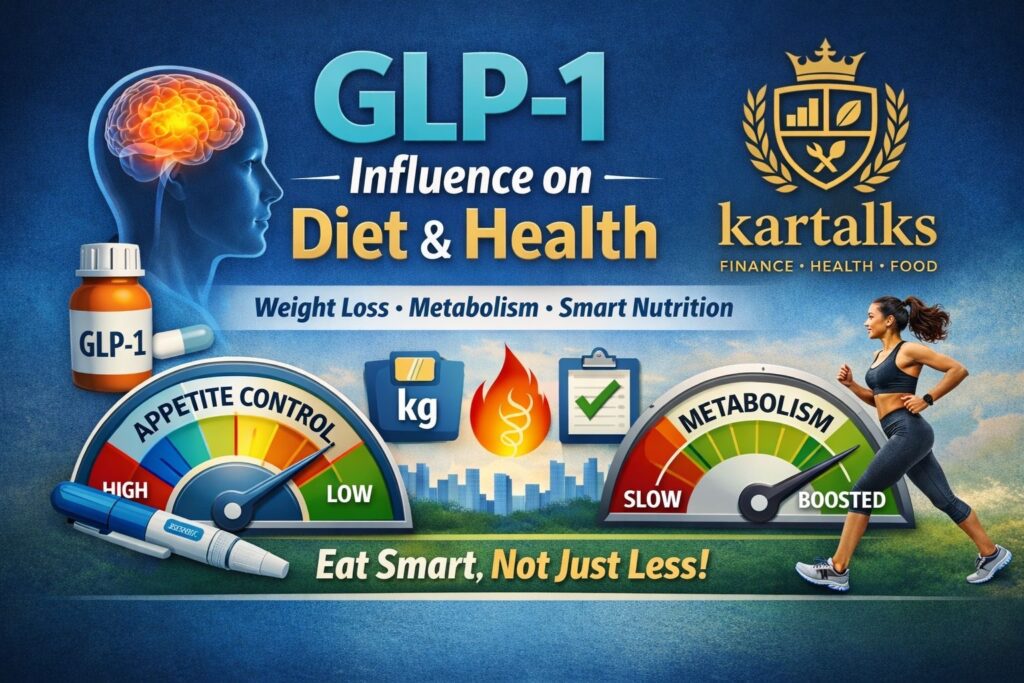
GLP-1 Influence on Diet and Health (2026): What It Means for Weight, Metabolism, and Everyday Eating
GLP-1 Influence on Diet and Health: GLP-1 medications have moved from “diabetes drugs” to a major public health and nutrition conversation. In 2026, they’re shaping how people think about weight regulation, cravings, meal planning, and long-term metabolic health—because they can change hunger signals, digestion speed, and blood sugar patterns in a very real way.
But here’s the most important point: a GLP-1 is not a substitute for nutrition. It can make it easier to eat less, but it can also make it easier to eat too little of the wrong things—leading to fatigue, constipation, nutrient gaps, or unwanted muscle loss if you don’t plan your meals well.
What GLP-1 Actually Is (in simple terms)
GLP-1 stands for glucagon-like peptide-1, a natural gut hormone your body releases after you eat. GLP-1 receptor agonist medications (often called “GLP-1s”) mimic that hormone’s effects to help regulate blood sugar and appetite.
The key effects that influence diet and weight
GLP-1 medicines commonly:
Reduce appetite and hunger by acting on brain pathways related to satiety (feeling “full”).
Slow gastric emptying (food leaves the stomach more slowly), which can reduce sudden hunger but may also cause nausea if meals are large or fatty.
Improve blood sugar control by increasing insulin response and lowering glucagon when appropriate.
This combination is a big reason many people find it easier to maintain a calorie deficit without constant cravings—something that’s historically been one of the hardest parts of weight loss.
Why GLP-1s Are a Dominant 2026 Theme
1) More people are using them for weight management
In the U.S., Wegovy (semaglutide), Saxenda (liraglutide), and Zepbound (tirzepatide) are among the well-known FDA-approved options for chronic weight management (for eligible people).
2) New formats are expanding the conversation
A big 2026 headline is the move toward oral (pill) options that may be more convenient for some people than injections—fueling even broader adoption and more interest in “GLP-1-friendly eating.”
The Good News: How GLP-1s Can Support Weight & Metabolic Health
When used appropriately under medical supervision, GLP-1 therapies can support:
Meaningful weight loss (primarily by lowering intake through appetite reduction).
Better glucose stability (helpful for insulin resistance and type 2 diabetes management).
Improved cardiometabolic markers in many people (lipids and inflammation signals may improve alongside weight and glucose changes).
Important: outcomes vary by person, dose, adherence, side effects, lifestyle, and starting metabolic health.
The Hidden Risk: “Smaller Appetite” Can Also Mean “Smaller Nutrition”
A GLP-1 can reduce appetite so much that people unintentionally:
Miss protein targets
Eat too little fiber
Skip micronutrients (iron, calcium, magnesium, potassium, vitamins)
Lose more lean mass than they expected if they don’t prioritize strength training and protein
That’s why the best approach in 2026 is not just “eat less,” but eat smarter with smaller portions.
The GLP-1 Food Strategy: What to Eat More Often
1) Protein first (to protect muscle)
GLP-1 medications can lead to loss of both fat and lean mass. A practical approach is to start meals with protein and aim for consistent intake across the day. One medical journal patient guide suggests ~1.0–1.5 g protein/kg/day for moderately active adults, and 20–30 g protein per meal as a simple anchor.👉Jama network
Easy protein options (small-portion friendly):
Eggs / omelet with veggies
Greek yogurt / skyr
Fish, chicken, tofu
Lentils, beans, chickpeas
Protein shake if appetite is very low
2) Fiber, but build it gradually
Fiber helps constipation (a common GLP-1 complaint) and supports fullness. But jumping from low fiber to high fiber can worsen bloating if your digestion is already slowed. Cleveland Clinic emphasizes nutrient-dense patterns with fruits, vegetables, and whole grains.👉clevelandclinic.org
Fiber-friendly picks:
Oats, quinoa
Berries
Beans/lentils
Leafy greens
Prunes (for constipation support)
3) Hydration + electrolytes matter more than you think
With smaller meals and possible nausea, people often drink less. That’s a recipe for headaches, fatigue, constipation, and poor workout recovery. A simple rule: sip water regularly, and consider soups, yogurt, fruit, and oral rehydration options if you’re struggling to eat.
4) Choose “gentle” foods when side effects flare
The most common adverse effects are GI-related (nausea, vomiting, diarrhea, constipation), often early in treatment or during dose increases.
When symptoms hit, many people do better with:
Smaller meals
Lower-fat cooking
Less fried/greasy food
Less very spicy food
What to Limit (especially early on)
Cleveland Clinic guidance for GLP-1 eating patterns commonly recommends reducing foods that can worsen GI effects, including:
Fried/high-fat meals
Highly processed snacks
Sugary drinks and desserts
Refined carbs (large portions)
Very spicy meals (if they trigger symptoms)
This is not about “perfect dieting.” It’s about comfort + consistency while your body adapts.
A Simple “GLP-1 Friendly” Day of Eating (example)
Breakfast (small but high-protein)
Greek yogurt + berries + a spoon of oats
Water / warm tea
Lunch
Grilled chicken (or tofu) + cooked vegetables + a small portion of rice/quinoa
Optional: soup if appetite is low
Snack
Protein shake (if needed) or a boiled egg + fruit
Dinner
Fish + salad (light dressing) + lentils or a small baked potato
Micro-habit
10–20 minute walk after one meal (helps glucose and digestion for many people)
(Adjust portions to your appetite—small plates are normal on GLP-1s.)
Fitness Matters More on GLP-1s (Not Less)
Because appetite drops, strength training becomes a protective strategy to help preserve lean mass and keep metabolism healthier during weight loss. Major hospital guidance emphasizes exercise benefits for insulin sensitivity, cardiovascular health, and weight management—especially for people taking GLP-1 agonists.
Practical weekly target (beginner-friendly):
Strength training 2–3 days/week (full body)
Walking most days
Prioritize protein on training days
GLP-1 Influence On Diet and Health Safety: What People Should Know (without fear)
Most people hear “nausea” and stop there. But safe use also means knowing the rare but serious concerns and who should avoid these meds.
Common side effects (often improve over time)
Nausea, vomiting, diarrhea, constipation (most common)
Important cautions to discuss with your clinician
Boxed warning related to thyroid C-cell tumors based on animal data; typically avoided with personal/family history of medullary thyroid cancer or MEN2.👉goodrx
Concerns around pancreatitis risk are discussed in clinical literature; rapid weight loss itself can be a risk factor—so symptoms like severe abdominal pain should be taken seriously.
A 2026 FDA labeling update worth knowing
In January 2026, the FDA posted that it requested removal of suicidal behavior/ideation warning for certain GLP-1 weight-loss products (Saxenda, Wegovy, Zepbound) based on its review context and labeling considerations. This doesn’t mean mental health symptoms should be ignored—just that labeling can evolve as evidence is reviewed.
If you feel persistently unwell, can’t keep fluids down, or have severe symptoms, contact a clinician urgently.
The 2026 Takeaway: “Smaller Appetite” Needs Smarter Nutrition
GLP-1 medications are changing the diet and health landscape because they can make weight loss more achievable for many eligible people by reshaping hunger, fullness, and glucose patterns.
But the winning 2026 strategy is simple:
Protein first
Fiber and hydration daily
Smaller, gentler meals
Strength training to protect muscle
Safety-first, clinician-guided use
FAQs
1) Do GLP-1 medicines replace diet and exercise?
No. They support appetite control but healthy eating and activity are still essential.
2) Why is nausea common with GLP-1 drugs?
They slow digestion, which can cause nausea—especially early in treatment.
3) Can GLP-1 use cause muscle loss?
Yes, if protein intake and strength training are inadequate.
4) Will weight return after stopping GLP-1?
It can, especially without lasting diet and lifestyle changes.
5) Are GLP-1 medications safe for everyone?
No. They must be used only under medical guidance.
👉Further reading
Miso Soup for Digestive Wellness: Why This Fermented Classic Is Trending Daily
🥗 Beetroot Cutlets (High-Fibre, Iron-Rich & Perfect for Evening Snack)
🧘♀️ Mindful Eating and Mental Wellness: How a Calm Plate Heals the Mind
Disclaimer
This article is for general education only and is not medical advice. GLP-1 medications should be used only with qualified medical guidance. If you have severe symptoms (especially persistent vomiting, dehydration, or severe abdominal pain), seek urgent medical care.
Good one. Interesting Article.
My Favorite. Something New Learned. Thanks .
Thank you so much for your kind words, Shaikh Abdul Hameed.
I’m glad you found the article interesting and learned something new from it. Your encouragement truly motivates us to keep sharing valuable and informative content on health and nutrition.
Thanks again for taking the time to read and comment. 🙏
Thank you, This motivated me to work on my eating habits.