
If you’re looking to lose weight and build sustainable, healthy eating habits, this comprehensive guide is for you.
As someone who works on both front-end and back-end parts of systems (so you understand building things carefully) think of your body and diet as a project: you’ll need structure, consistency, and good “UI/UX” of your daily habits for the best outcomes.
Why it’s not just about “cutting calories”
Many people assume weight loss is simply “eat less, exercise more” — but research tells us it’s more nuanced.
For example, one review explains that successful weight management focuses on changing eating habits and increasing physical activity, rather than just extreme dieting.
Moreover, diet quality, habit formation and behavioral support matter a lot when it comes to keeping weight off long-term.
In short: calories matter, but what you eat, when you eat, and how consistently you apply it matter just as much.
Top diet & lifestyle habits that support weight loss
Here are actionable habits backed by research — you can treat these as “features” to build into your lifestyle project.
1. Increase protein & fibre
- A study found that individuals who ate more protein and fiber lost significantly more weight.
- Protein helps you feel full and supports lean muscle mass. Fibre slows digestion and reduces hunger.
- Good targets: Aim for ~25-30g fiber per day.
2. Eat minimally processed, whole foods
- Diets with fewer ultra-processed foods resulted in greater weight loss compared to diet purely matched for calories.
- Choose whole fruits, vegetables, legumes, whole grains, lean proteins, healthy fats.
- Avoid snacks and meals heavily composed of sweetened, packaged or ready-to-eat processed foods.
3. Balance your meals & portions
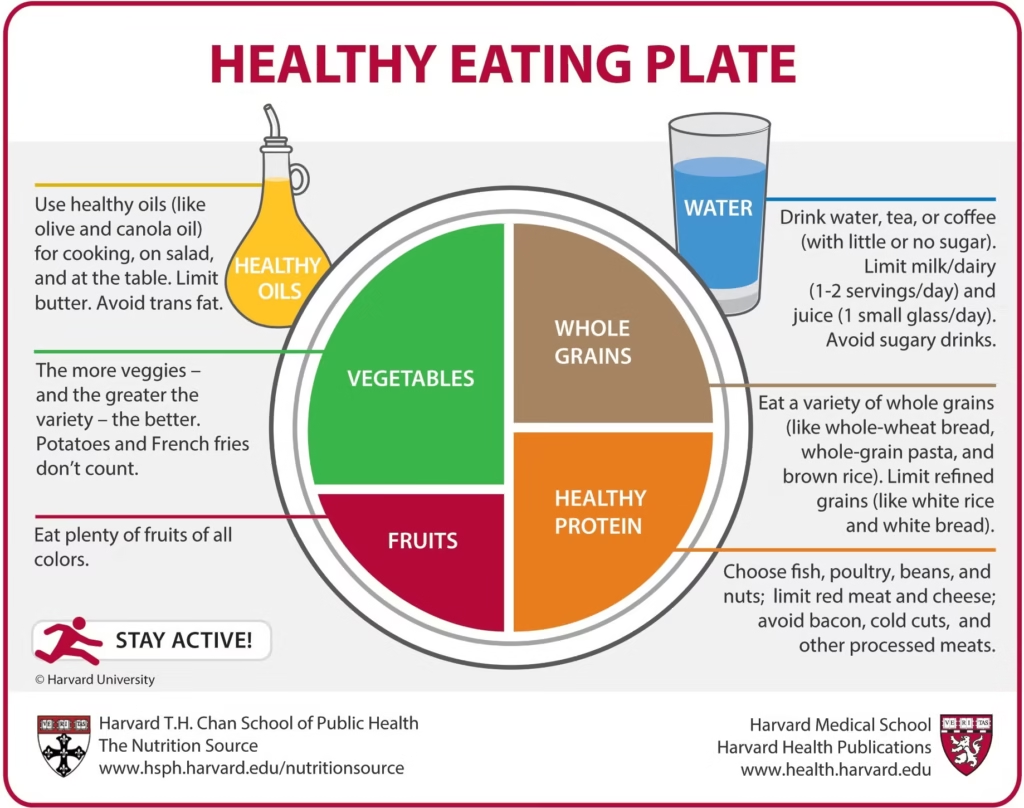
- A “healthy diet” according to Harvard Health Publishing includes unprocessed foods, lots of plant foods, lean proteins, healthy fats.
- Be mindful of portion sizes — oversized meals can quietly derail your calorie budget.
- Example meal: Salmon on bed of spinach (dinner), bran flakes with strawberries and walnuts (breakfast).
4. Don’t skip breakfast / avoid waiting until overly hungry
- Letting yourself get too hungry often leads to overeating or impulsive food choices.
- Starting with a balanced breakfast helps regulate appetite and supports better choices throughout the day.
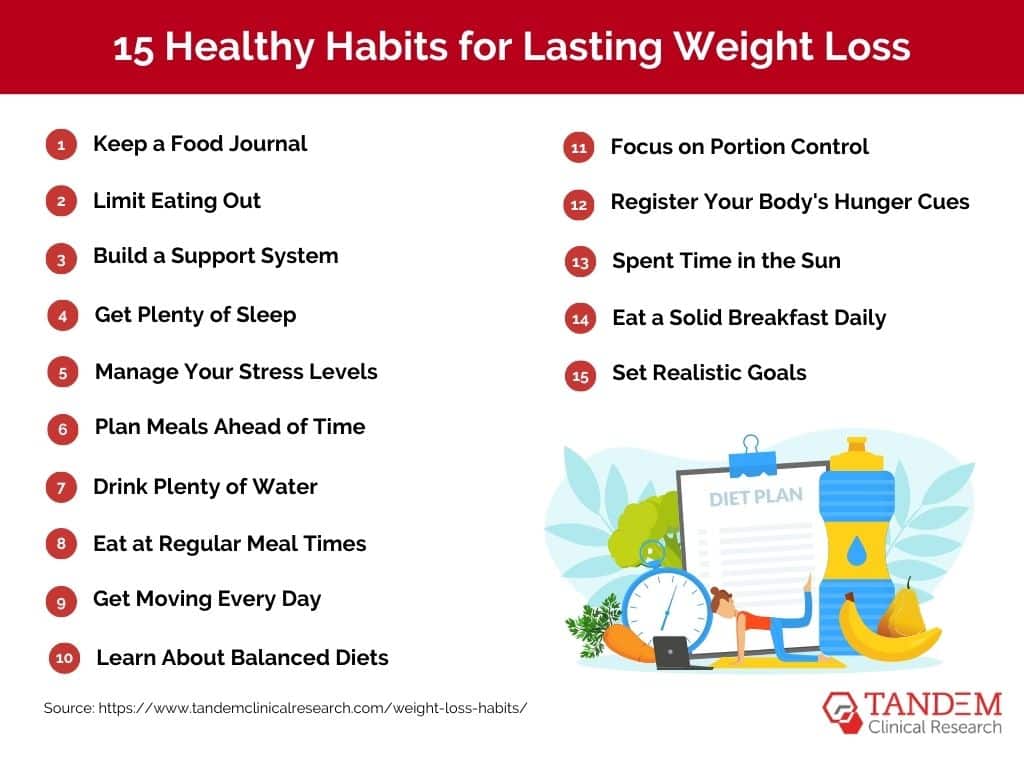
5. Plan ahead & track your habits
- Habit-building is key for weight loss maintenance.
- Helpful tools:
- Food journal or tracking app
- Weekly meal / snack plan
- Cooking at home rather than relying on take-out
- These strategies improve awareness and adherence.
6. Include regular physical activity
- While exercise alone isn’t always sufficient for large weight loss, it’s vital for health and supports weight maintenance.
- Aim for at least 150 minutes of moderate-intensity activity weekly (walking, cycling, etc.).
- Strength training also helps maintain muscle mass when losing weight.
7. Focus on sustainable habits, not quick fixes
- Quick crash diets often lead to “yo-yo” weight cycling which has risks.
- The best strategy is one you can stick with long term — structure your plan so that it fits your lifestyle.
Example Weekly Habit Table
Here’s a table you can adapt (you’re a developer — you could even build this into your own habit tracker app!).
| Habit | Monday | Tuesday | Wednesday | Thursday | Friday | Saturday | Sunday |
|---|---|---|---|---|---|---|---|
| Breakfast: whole grain + protein + fruit | ✔ | ✔ | ✔ | ✔ | ✔ | ✔ | ✔ |
| Lunch: lean protein + veg + whole grain | ✔ | ✔ | ✔ | ✔ | ✔ | ✔ | ✔ |
| Dinner: vegetable focus + modest carbs + healthy fat | ✔ | ✔ | ✔ | ✔ | ✔ | ✔ | ✔ |
| Snack(s): high-fibre/lean-protein (no ultra-processed) | ✔ | ✔ | ✔ | ✔ | ✔ | ✔ | ✔ |
| Track food/habits for the day | ✔ | ✔ | ✔ | ✔ | ✔ | ✔ | ✔ |
| 30 min moderate exercise or 10k steps | ✔ | ✔ | ✔ | ✔ | ✔ | ✔ | ✔ |
| Drink water instead of sugary beverages | ✔ | ✔ | ✔ | ✔ | ✔ | ✔ | ✔ |
| Meal prep or plan for next day | ✔ | ✔ | ✔ | ✔ | ✔ | ✔ | ✔ |
You can mark each “✔” or leave blank where you miss. Over time you’ll see patterns and can improve.
Sample Macro / Meal Composition Table
Here’s a simple guideline table — adjust based on your calorie needs, activity level, and health status (consult with a professional if needed).
| Meal | Typical Components | Approx % of Daily Calories* |
|---|---|---|
| Breakfast | Whole grain (e.g., oats, whole-wheat toast), fruit, lean protein (eggs/Greek yogurt/nuts) | ~20-25% |
| Lunch | Lean protein (chicken/fish/legume), non-starchy vegetables, a whole grain or starchy veg | ~30% |
| Dinner | Vegetables (larger portion), lean protein or plant-based protein, healthy fat (olive oil/avocado), small portion carbs | ~30% |
| Snacks | High-fibre vegetables/fruits, small servings of nuts/low-fat cheese/Greek yogurt | ~10-15% |
*These are rough percentages — what matters most is total calorie intake vs. expenditure, and consistency over time.
Tips for UI/UX-Friendly Habit Design (for you as a developer)
Since you build experiences, you might find these analogies helpful while designing your own lifestyle system:
- Dashboard: Create a weekly view of habits (like the table above) to visualize consistency.
- Notifications / Reminders: Use alerts for meal-prep time or logging food; trigger before you’re overly hungry.
- Gamification: Track streaks of “healthy days”, give yourself micro-rewards.
- Data Visualization: Graph your weight, energy levels, mood — see correlation with habit adherence.
- Iterative Improvements: If a habit is failing (e.g., snacks not healthy), adjust the “UI” (environment) to make the healthy choice easier — e.g., pre-cut vegetables, keep nuts ready.
Common Mistakes & How to Avoid Them
- Skipping meals to “save calories” → leads to hunger, uncontrolled eating later. Instead: regular meals + healthy snacks.
- Relying on fad diets that aren’t sustainable. Choose patterns you can maintain.
- Ignoring sleep & stress → both affect appetite hormones and weight regulation.
- Neglecting habits after weight loss → maintenance requires persistence.
What Should a Sample Day Look Like?
Here’s a practical illustration of what your day could be:
- 07:30 – Breakfast: Greek yogurt with berries + walnuts + a slice of whole-grain toast.
- 10:30 – Snack: Carrot sticks + hummus.
- 12:30 – Lunch: Grilled chicken breast, quinoa, mixed salad (lettuce, tomato, cucumber) with olive oil & lemon.
- 15:30 – Snack: Apple + a small handful of almonds.
- 18:30 – Workout / Walk for 30 minutes.
- 20:00 – Dinner: Baked salmon, steamed broccoli and asparagus, sweet potato (small portion).
- 21:30 – Relaxation, then aim for 7-8 hours of sleep.
- Throughout day: drink water (aim for ~2-3 L depending on your body size). Avoid sugary drinks.
Why Your Backend (Habits) Matter More Than the Frontend (Quick Fixes)
You’ve got a strong technical mindset. Think of your body this way: the backend systems are your metabolic rate, hormone regulation, muscle mass, gut health. The frontend is what you see: weight on scale, how you feel, how you look.
If you just focus on the “frontend” (scale, quick fix diets) you’ll likely suffer bounce-back because the backend systems weren’t sustainably addressed. Research shows continuing dietitian support, tailored plans and behavioral counselling lead to better long-term success.
Short Summary:
“Effective weight loss isn’t about drastic diets—it’s about building good diet habits and lifestyle changes that last. Focus on whole, minimally processed foods; increase protein and fibre; plan your meals; maintain portion control; stay active; and design a habit system you’ll stick to. Over time, this creates sustainable results instead of fast, temporary fixes.”
Final Thoughts
- Set realistic expectations: losing ~0.5-2 pounds (≈0.2-0.9 kg) per week is considered safe and maintainable.
- Build systems (your habits, tracking, meal prep) like you build code modules: start small, test, iterate.
- Focus on consistency over perfection. A few “off” meals won’t wreck progress—just get back on track.
- Since you are used to learning new technologies, treat this like onboarding a “diet & lifestyle framework” rather than a crash project. You’ll adapt and grow.
Pingback: Sustainable Fitness: A Beginner’s Playbook - KARTALKS.COM